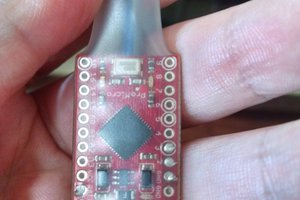
I didn't have a MIDI keyboard, just a really old digital keyboard with no digital interface...yet.<br>I took the old one out and cracked it open, then monitored what every key press signaled on the internal PCB and slowly reverse engineered the pattern (spoiler: it's multiplexing!).<br><br>I later stuck an Arduino inside the keyboard to monitor the signals, and updated the Arduino UNO's comm chip firmware to act as a MIDI device, and exposed the Arduino's USB port on the back of the keyboard. The Arduino sends the appropriate MIDI message from the signals it monitors. <br>Read the full build here: <a target="_blank" rel="noopener noreferrer" href="https://medium.com/@mero11.gh/midi-fying-an-old-casio-digital-keyboard-6a9ae9f3092b">https://medium.com/@mero11.gh/midi-fying-an-old-casio-digital-keyboard-6a9ae9f3092b</a>
I'm going to nitpick(sorry) and point out that an octave covers only one scale! which in this case is 7 consecutive white keys (so in our case it would cover 12 keys (7 white + 5 black)).
I believe the division to sections of 4 with 8 keys(notes) is that any other combination would need more wires.
Nitpick all you like - I'm not exactly musically inclined. I thought an octave would be eight keys of any color, but I guess it's just a convenient factor of 32 keys on the keyboard.
Just read the article, pretty clever how they multiplexed by octave and note. And good job decoding that on the cheap.