• First Concept: Finding the Right Mechanism

    Alex • 05/02/2026 at 10:23 • 0 comments

    For a long time, I couldn’t figure out a good way to mount a monitor above my bed. I went through a lot of ideas and references online trying to find something that would actually work in practice.

    Most solutions I found fell into a few categories:

    • Tablet/monitor arms mounted to the bed frame or bedside
    • Ceiling-mounted setups
    • Fixed mounts at the foot of the bed
    • Complex overhead constructions using aluminum profiles or custom frames

    I also experimented with a standard monitor arm. It didn’t work well — these arms are designed for desk mounting, and adapting them for a stable overhead position turned out to be awkward and unreliable.

    Another important requirement was usability: the monitor should be easy to move out of the way when not in use. I didn’t want something permanently hanging over my head.

    Inspiration

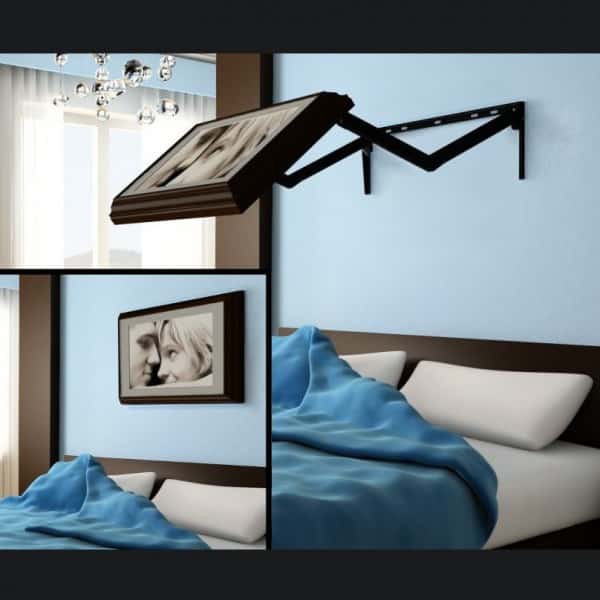
    Eventually, I came across a concept that really stood out (see image above).

    The design uses a folding wall-mounted arm that allows a screen (or TV) to extend outward and then fold flat against the wall when not in use. In the folded state, it takes up almost no space — clean, compact, and practical.

    That was exactly what I was looking for.

    The downside? Cost and mechanical complexity. Replicating something like this directly would be overkill for my needs.

    But it gave me a clear direction: a folding, wall-mounted system that can completely disappear when not in use.

    My Approach

    Instead of copying the mechanism, I decided to simplify the idea.

    The core of my design is:

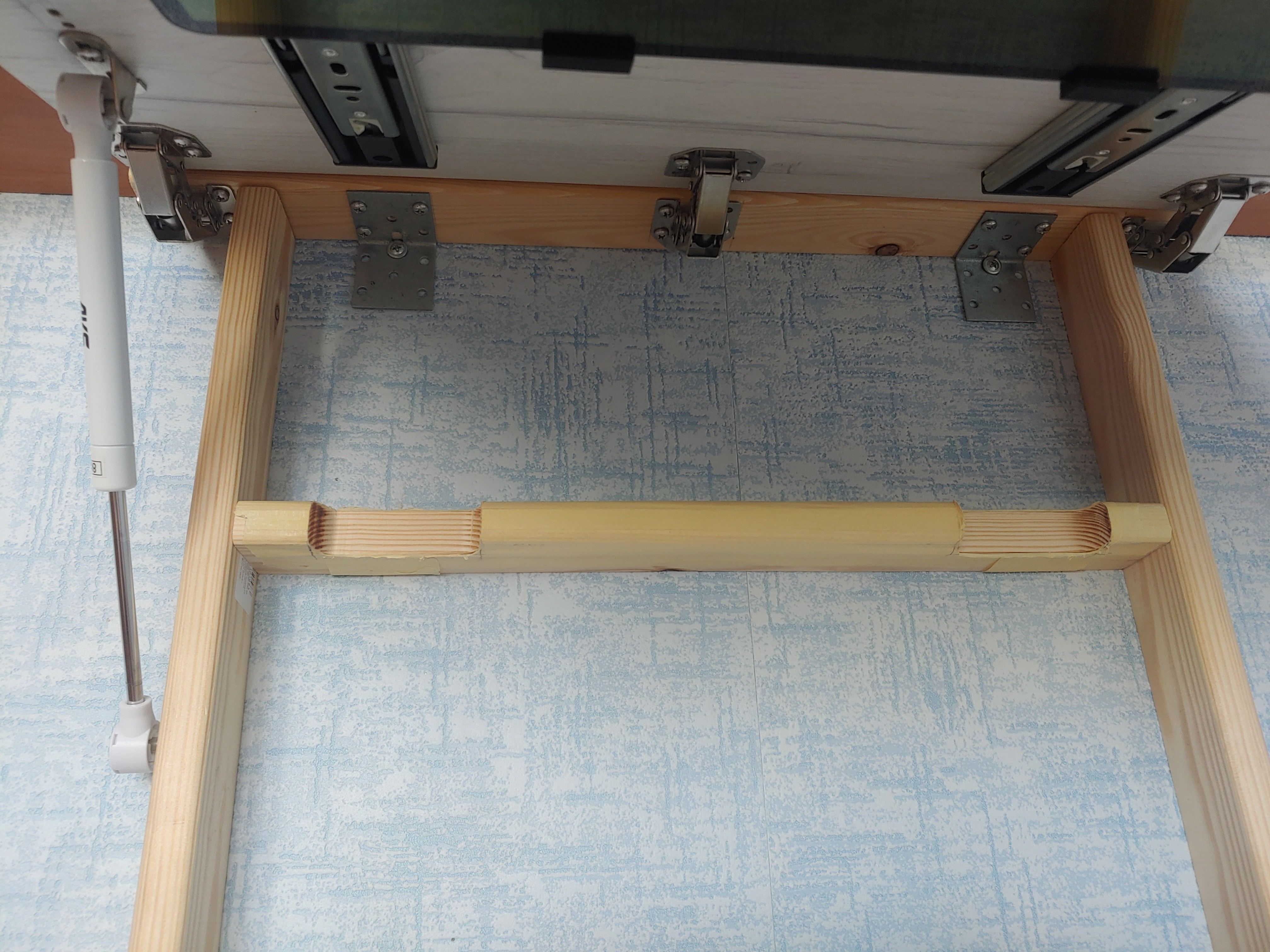
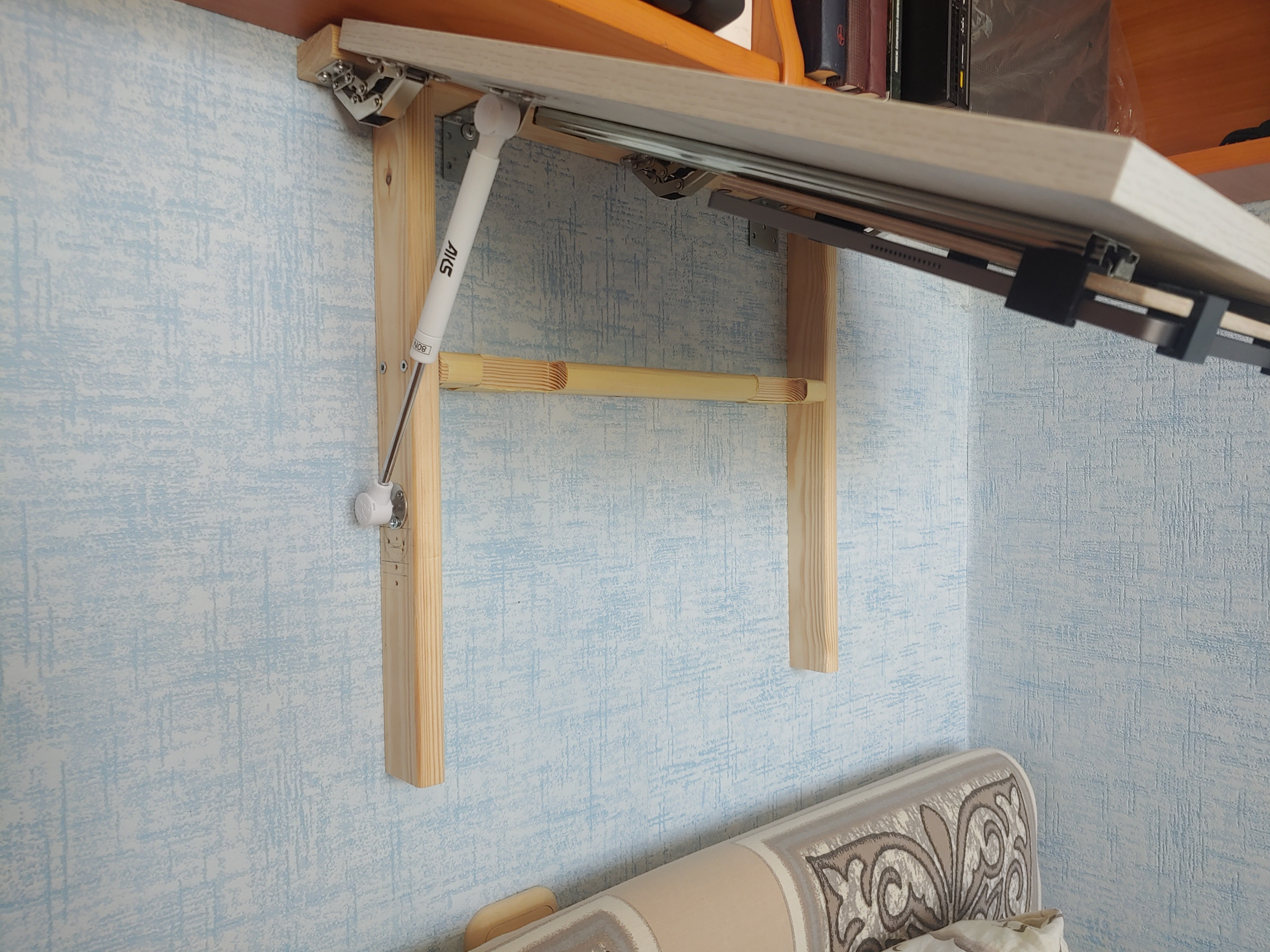
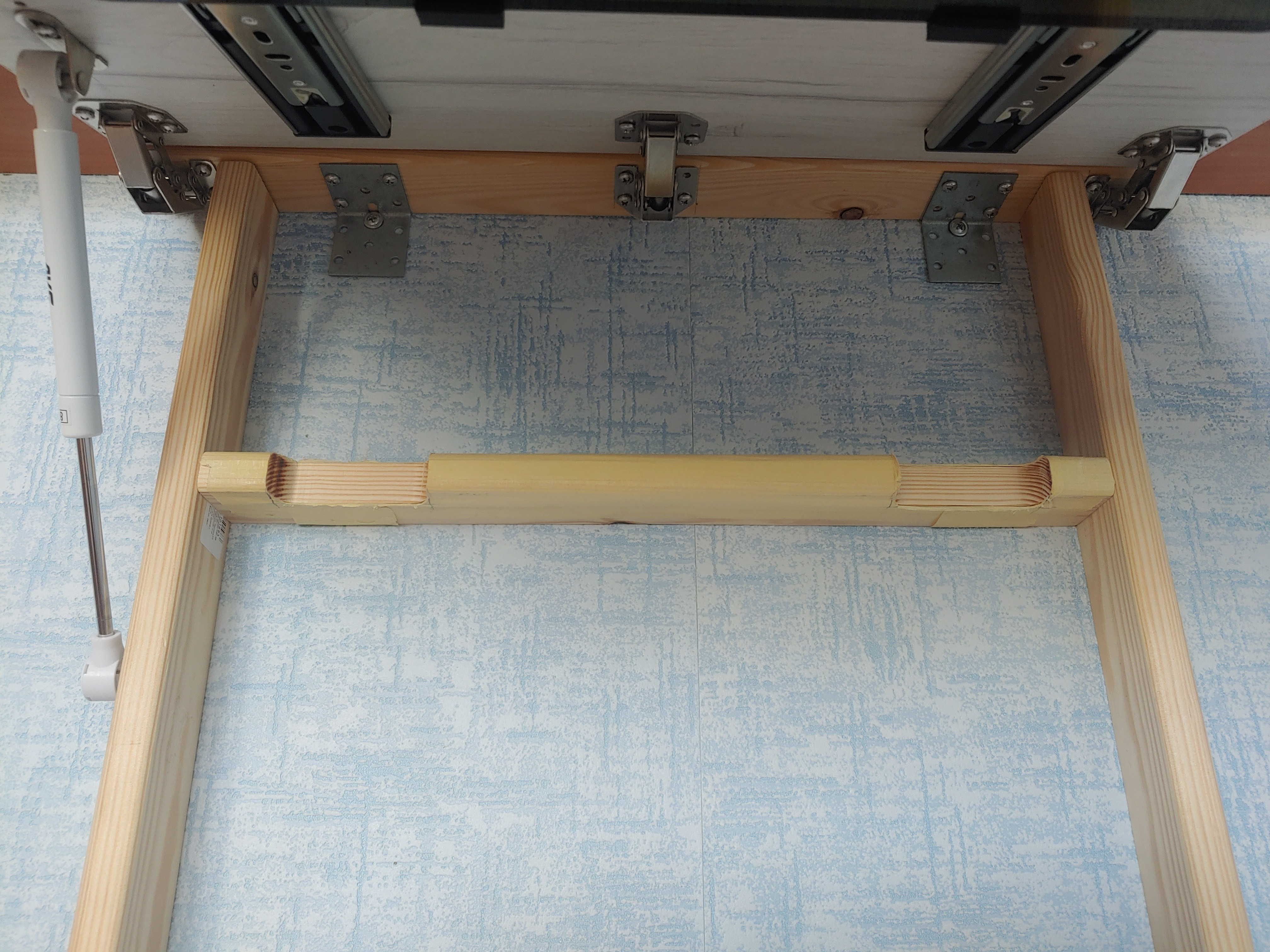
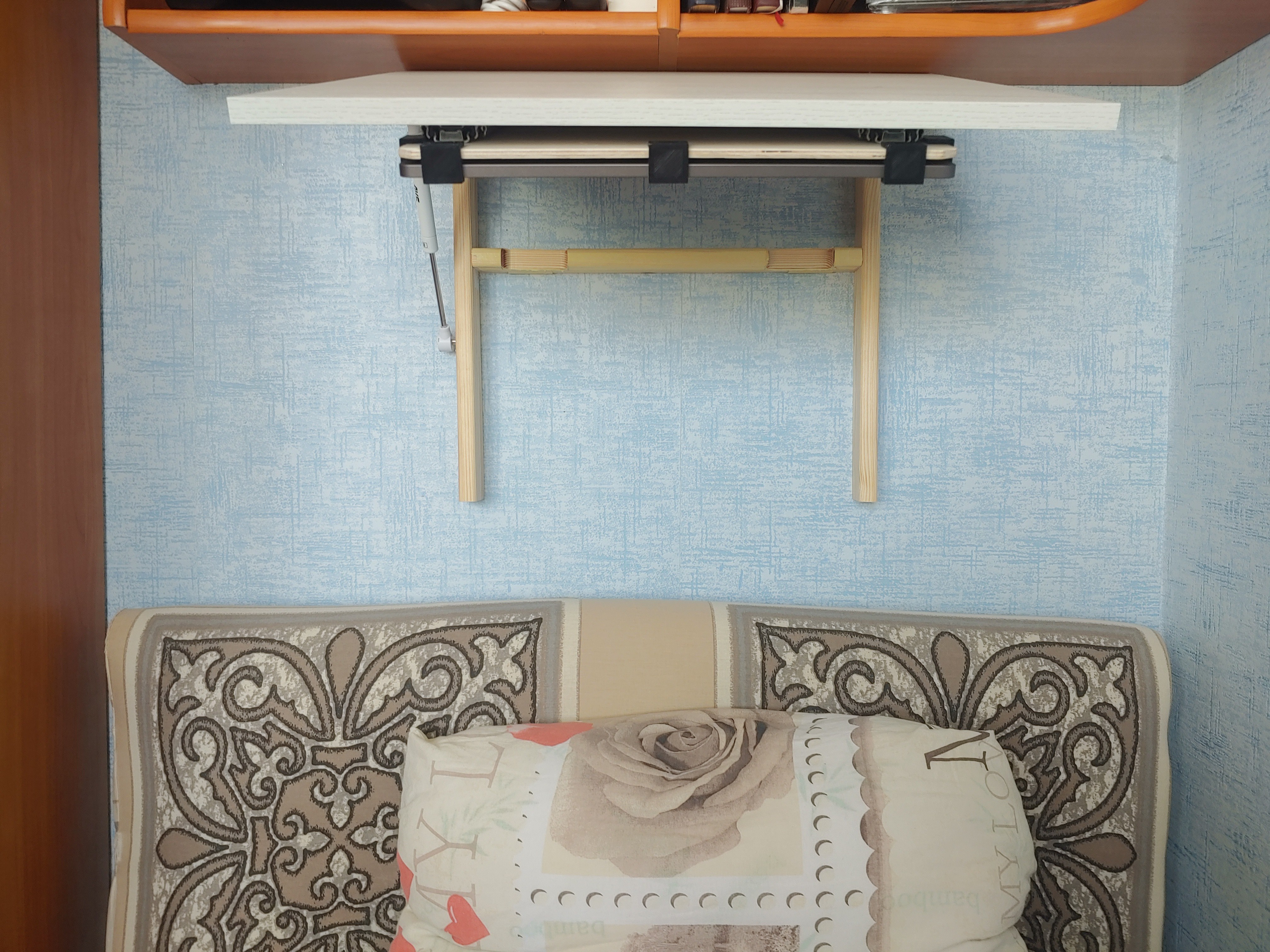
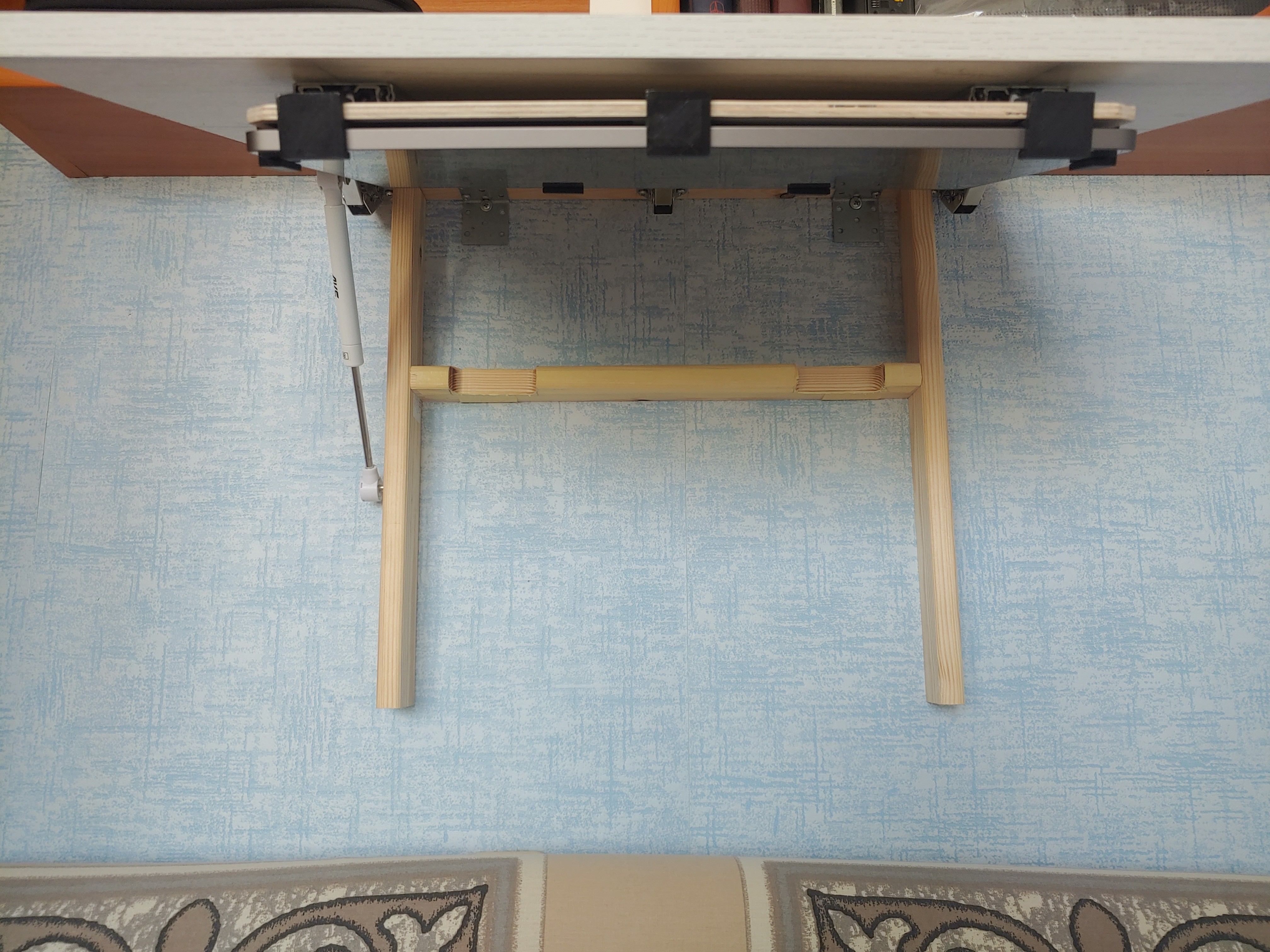
    • A wide laminated board (~55 × 45 cm), acting as a front panel
    • A shallow wall-mounted enclosure (about 4–5 cm deep)
    • The panel functions like a hinged door
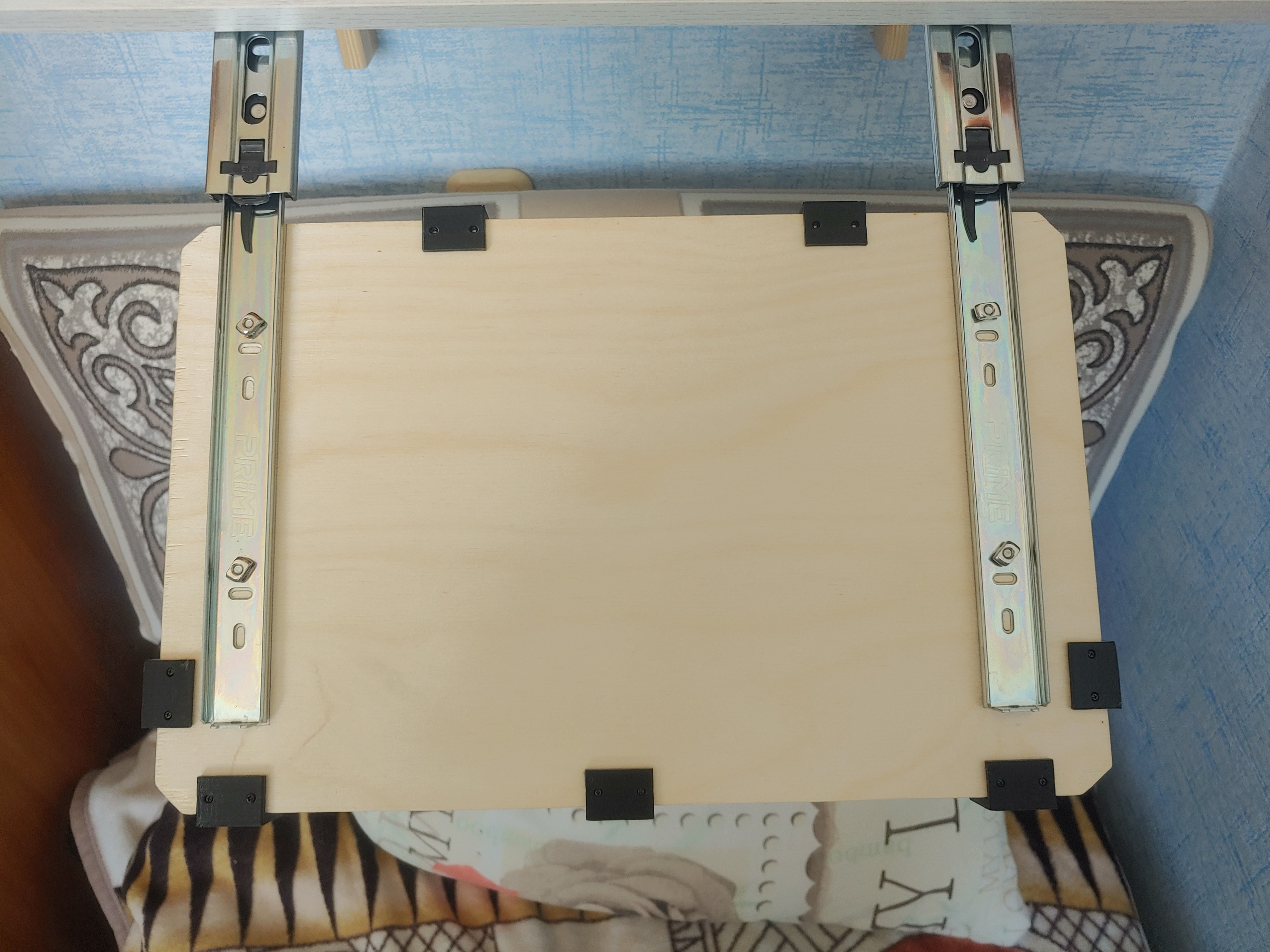
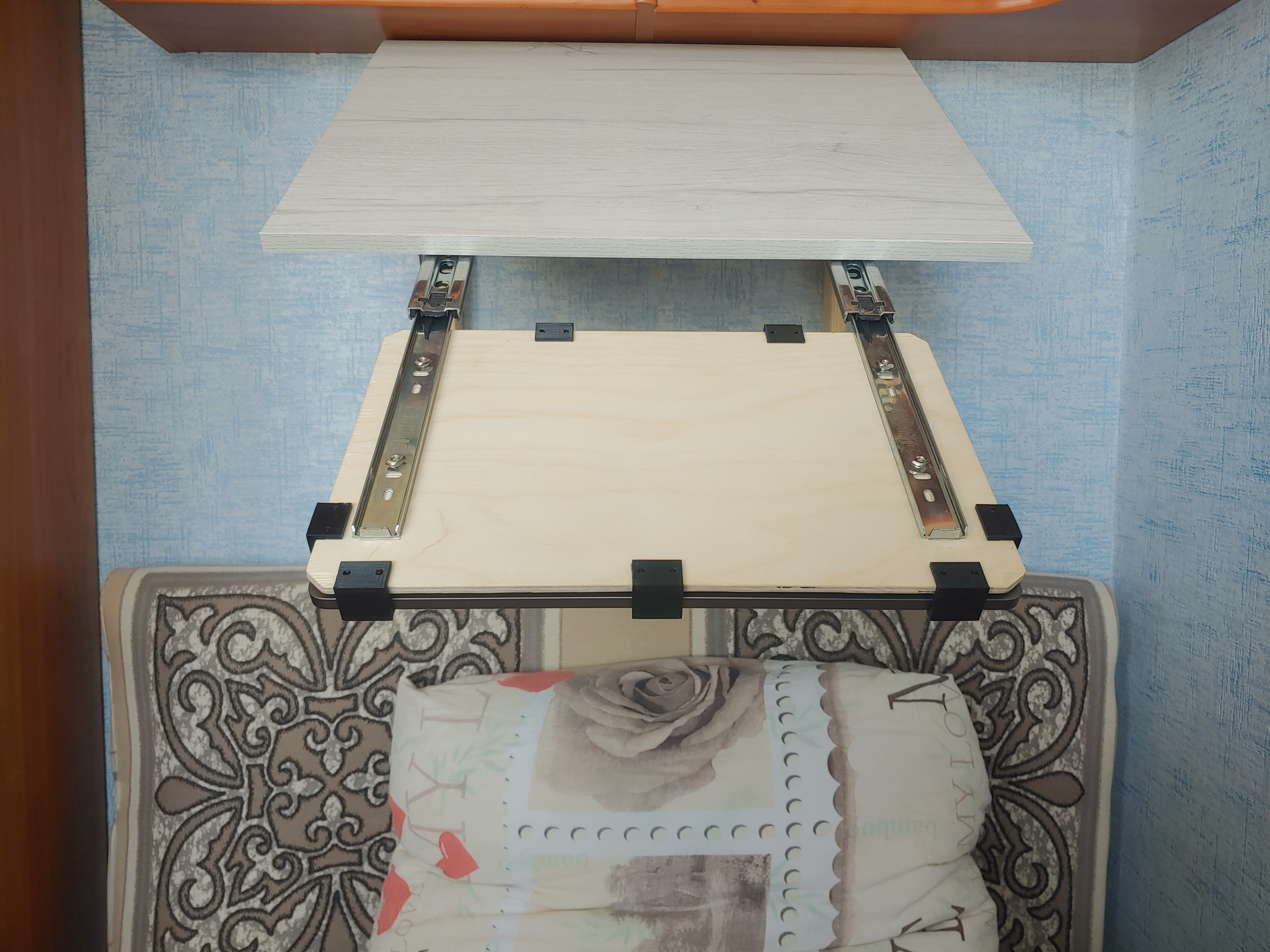
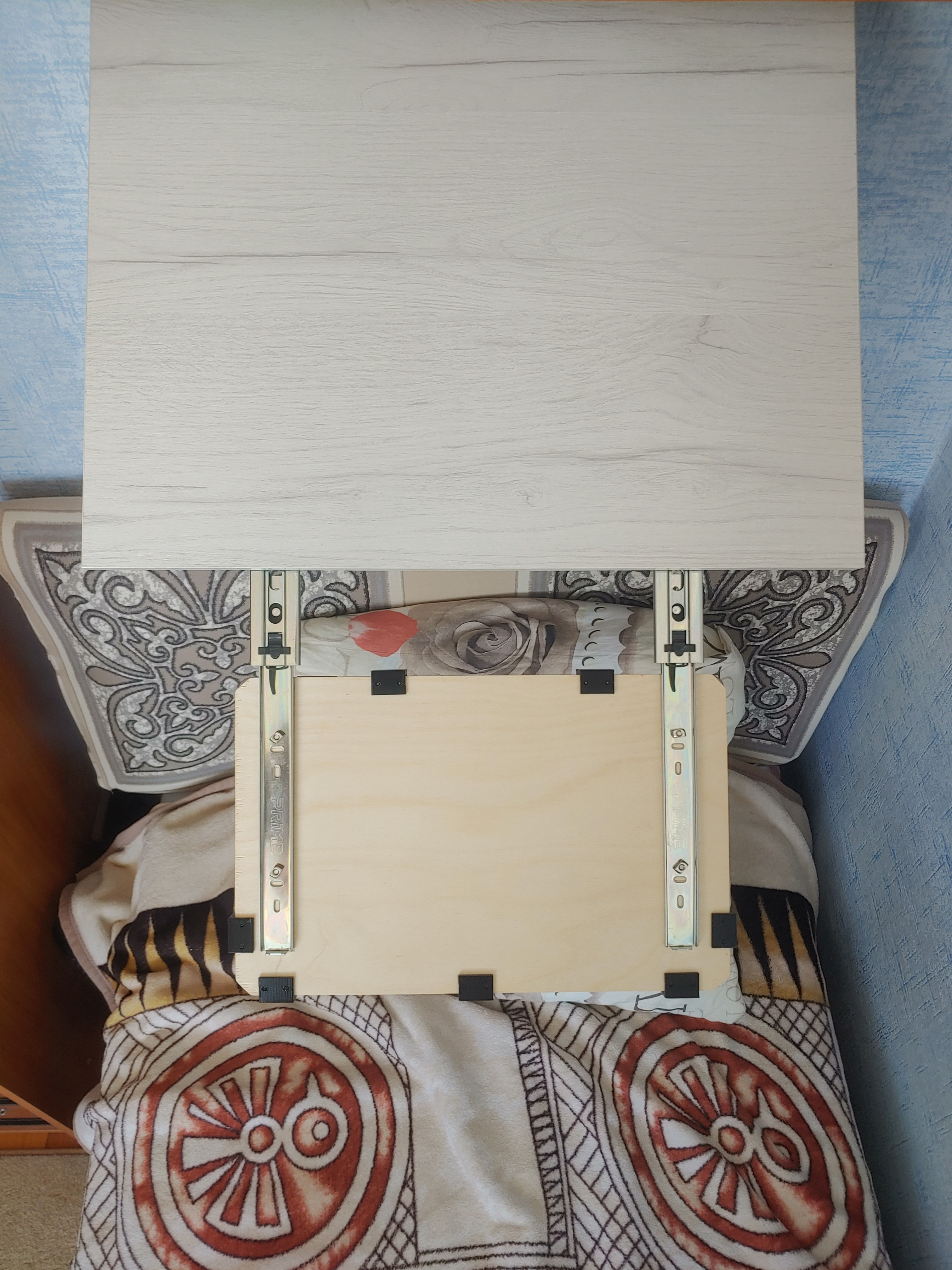
    • Inside, a 15" portable monitor is mounted on push-to-open drawer slides

    Here’s how it works:

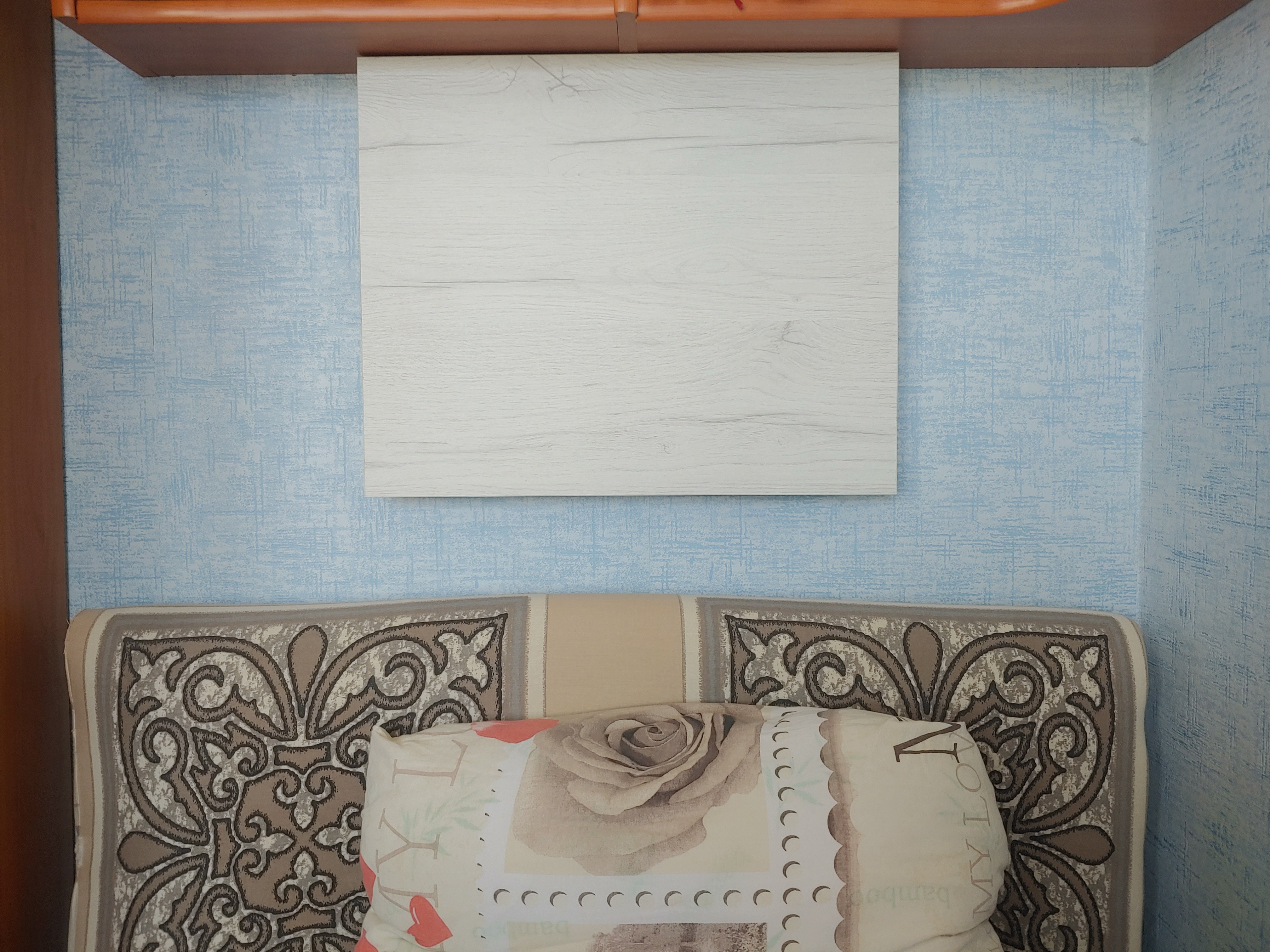
    • In the closed state, the panel sits flush against the wall
    • The monitor is fully hidden inside the enclosure, parallel to the wall
    • The drawer slides are locked in place

    When I want to use it:

    1. I open the front panel to a comfortable angle
    2. I pull the monitor outward on the slides

    The monitor moves forward while staying parallel to the panel, giving me a usable viewing position above the bed.

    Current Challenges

    Right now, I’m working on two main problems:

    1. Cable management

    The monitor needs to extend and retract smoothly, which means the cable has to move with it. I need a solution that allows the cable to extend and retract reliably without getting in the way or wearing out.

    2. Position control

    At the moment, I can control the angle of the monitor (by adjusting the panel), but not the distance it extends.

    If we think in polar coordinates:

    • I can control the angle of the vector
    • But not its length

    Adding adjustable extension would allow full positional control in space (except tilt, which I’m okay without).

    That’s the next step.

    This is still an early prototype, but the core idea is now clear — and much simpler than my initial attempts.