Tape robots are fascinating to watch but I don't have any tapes and they are large and expensive.
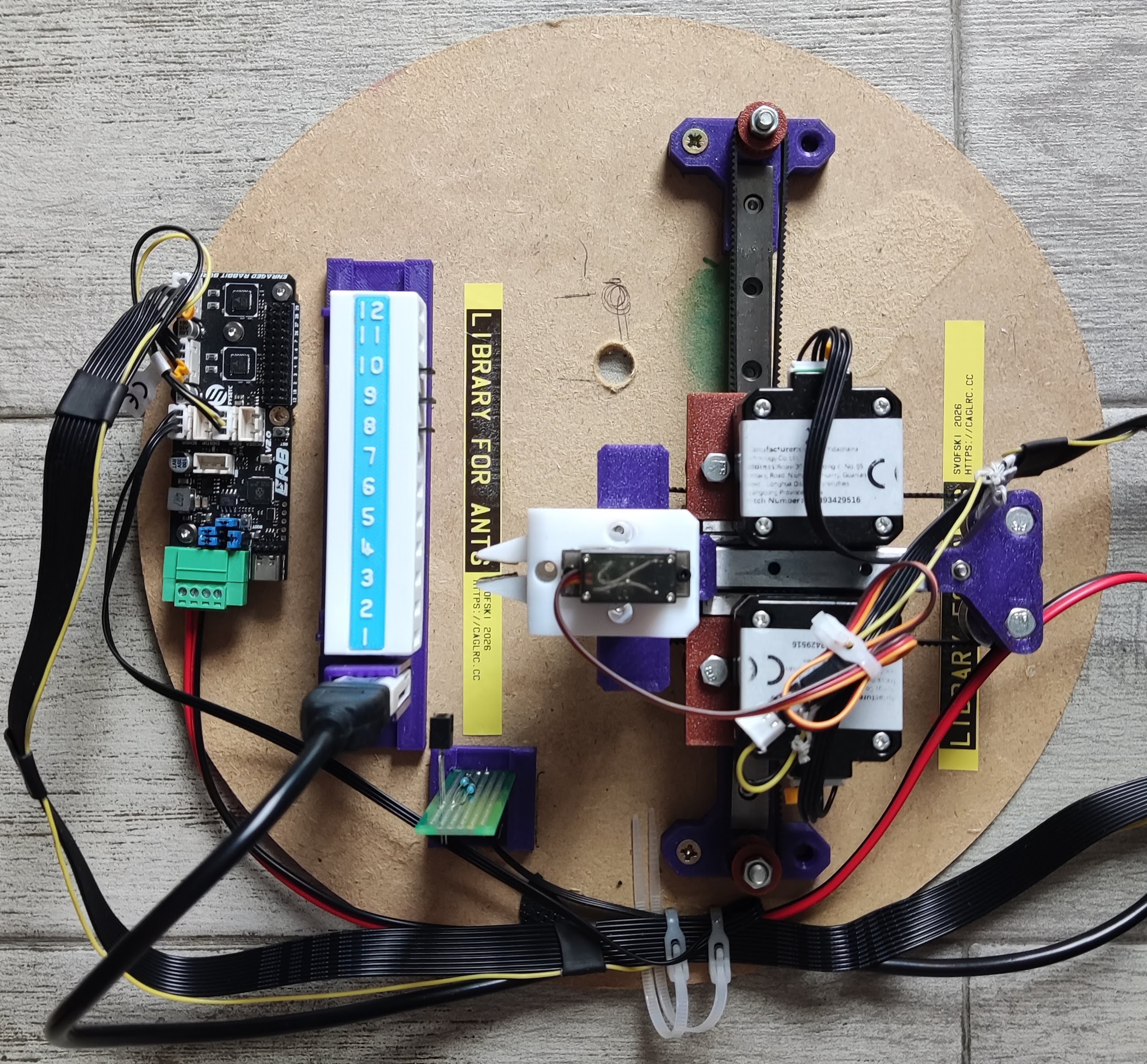
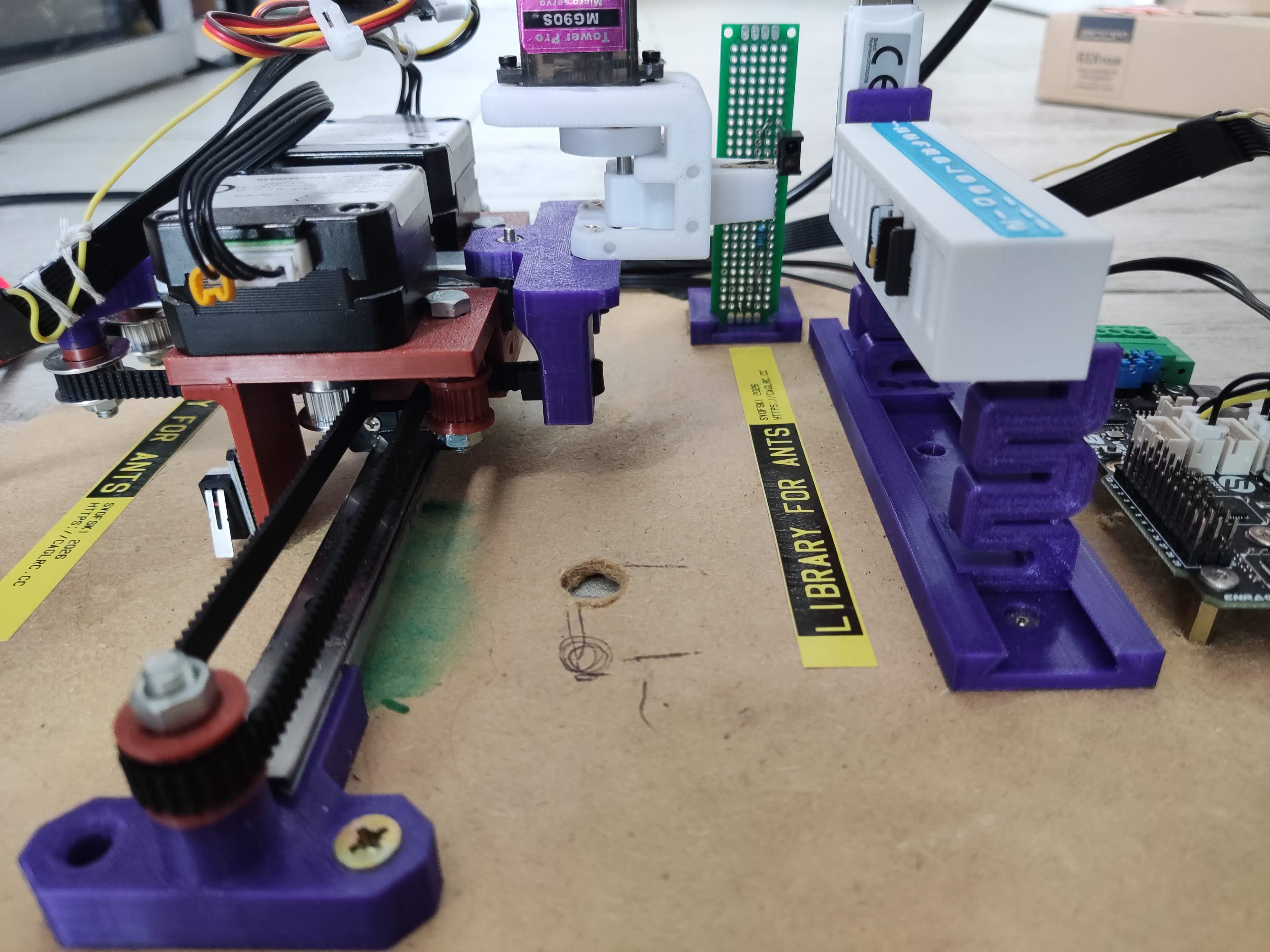
I built a miniature version of a tape changing robot, or a microSD card library. A library for ants.
Like most stuff that I do I think it's a kind of weird art project. One can make jokes about storage costs and stuff, but the practical use is purely therapeutic. You get to watch a machine do cool stuff. So here's a video first:
Mad props to [Jammer] for this phenomenal cover of Voodoo People!
GRIPOR
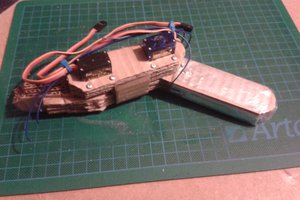
Gripper is a project in itself and if anything from Library for ants ever happens to be useful to anyone, it's this.
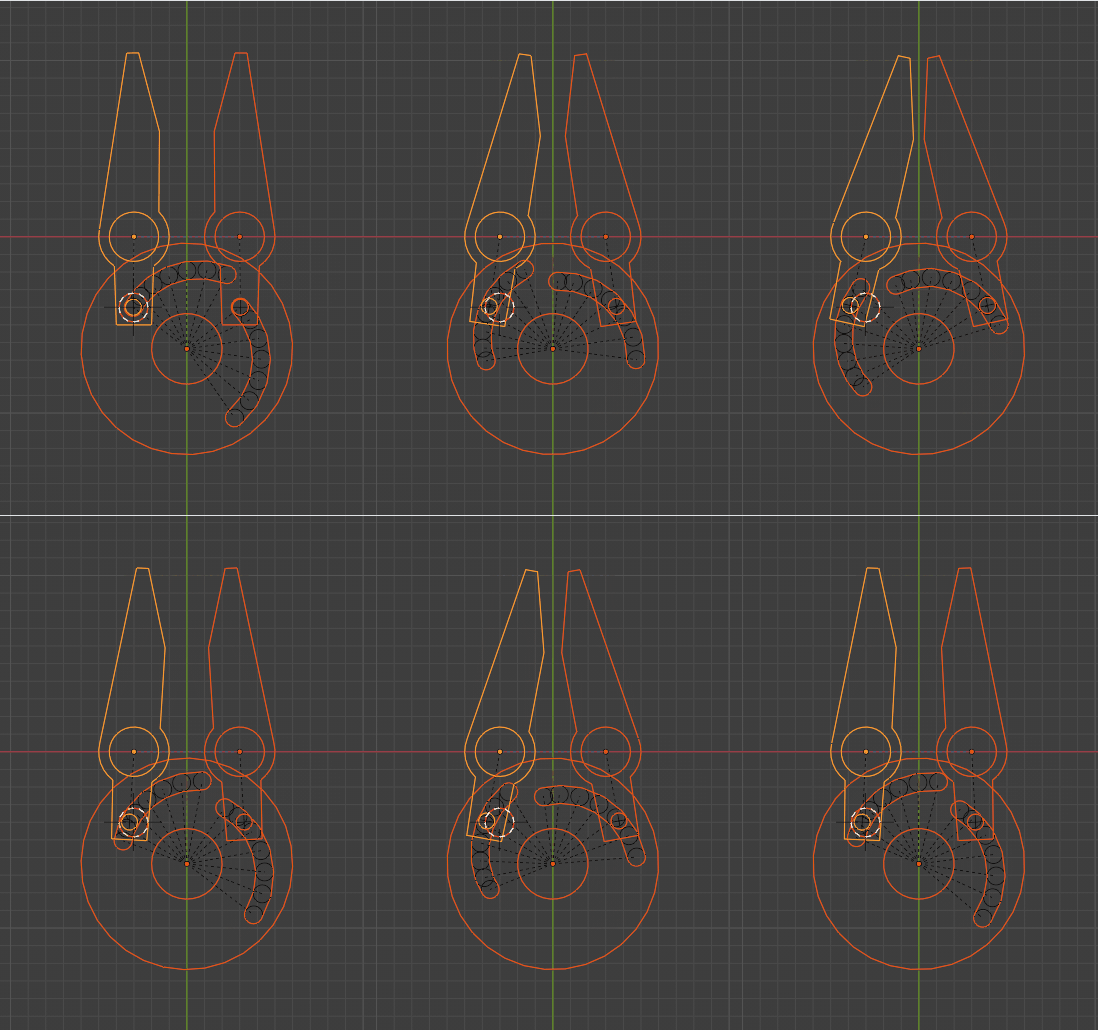
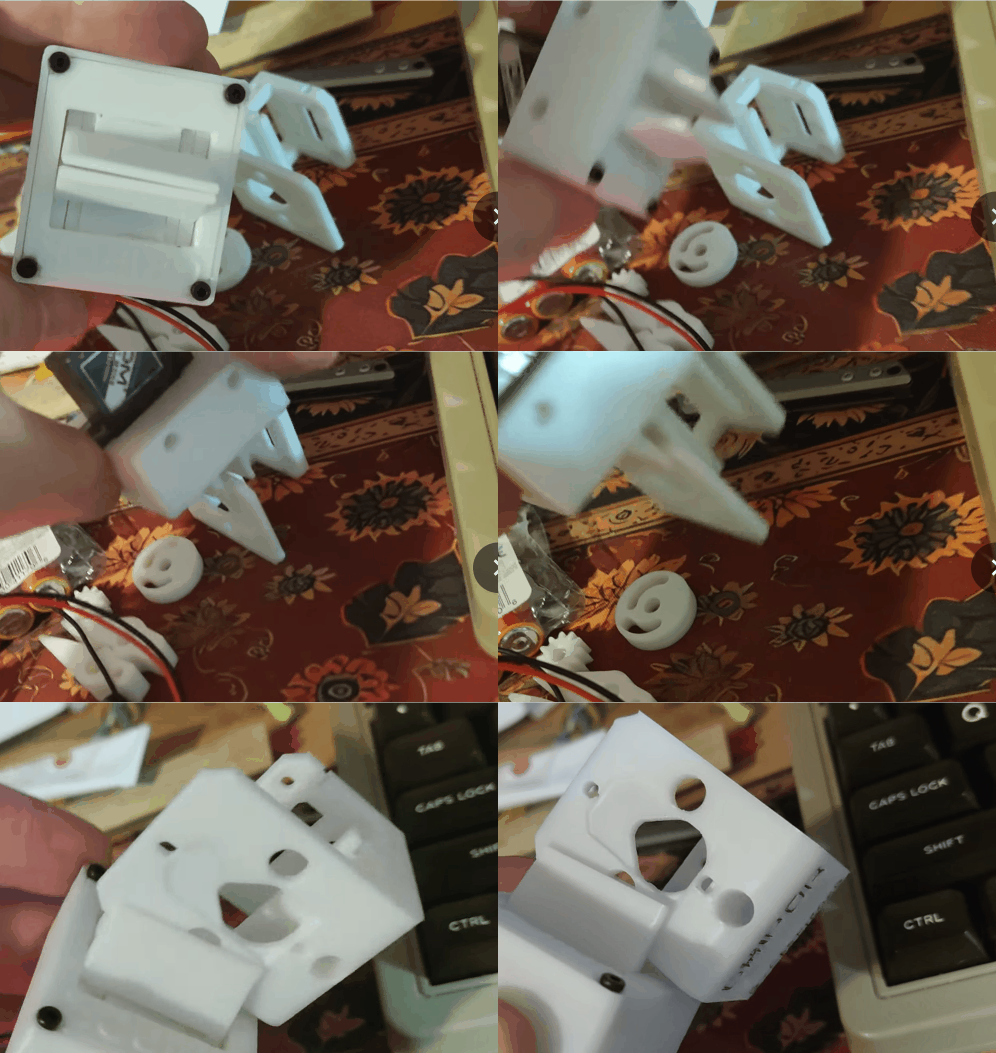
I tried to replicate the movement of a pneumatic sprue gripper but with a common RC micro servo. I designed it in build123d.
Here's an animated kinematic explanation:
And a quick build demo
Although the result is a success, using build123d was a mistake and a colossal waste of time. It was incredibly painful to deal with even with LLMs whispering me hints. For programmer's CAD there is OpenSCAD, which is excellent for what it does. For things that are more hands-on and need shapes that are hard to imagine programmatically, there is FreeCAD which I cannot recommend enough.
I made another GRIPOR design that uses less hardware and has parallel pliers.
And it also works well:
But I didn't end up using this design in Library for ants.
The main mechanism
There's no need to elaborate too much on the mechanics and kinematics here as it is well understood. I used what's called a T-bot arrangement, which is a variant of CoreXY kinematics in which both X and Y motors are mobile and slide along the X axis. The benefits here are: 1) we could put all electronics together with motors and 2) you can scale it to any reasonable size just by replacing the linear rails to longer ones. This will come in handy when this project is scrapped for something else.
The controller is Enraged Rabbit Burrow controller, which I believe is made for an opensource filament changer for 3d printers. For me it was a lucky find as it's basically a RP2040, two Trinamic stepper drivers, a bunch of power electronics and all the necessary hardware, already designed, debugged and manufactured and sold for a very competitive price. It was a fantastic find.
Card detection
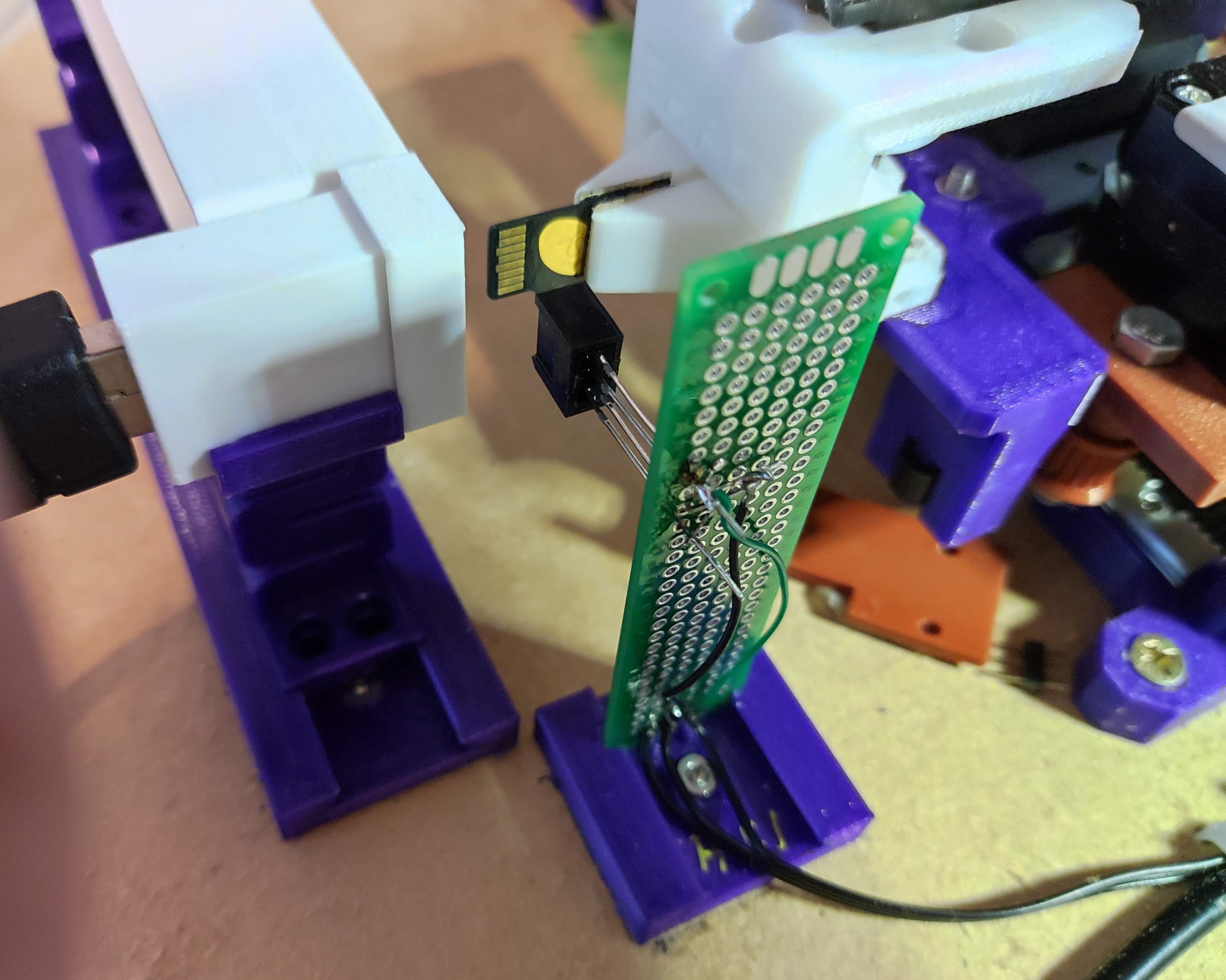
ST188 is a great optical sensor which was easy to tune so that it sees the shiny contacts of microSD cards really well and ignores everything else. It is attached to what Klipper thinks is a filament runout sensor.
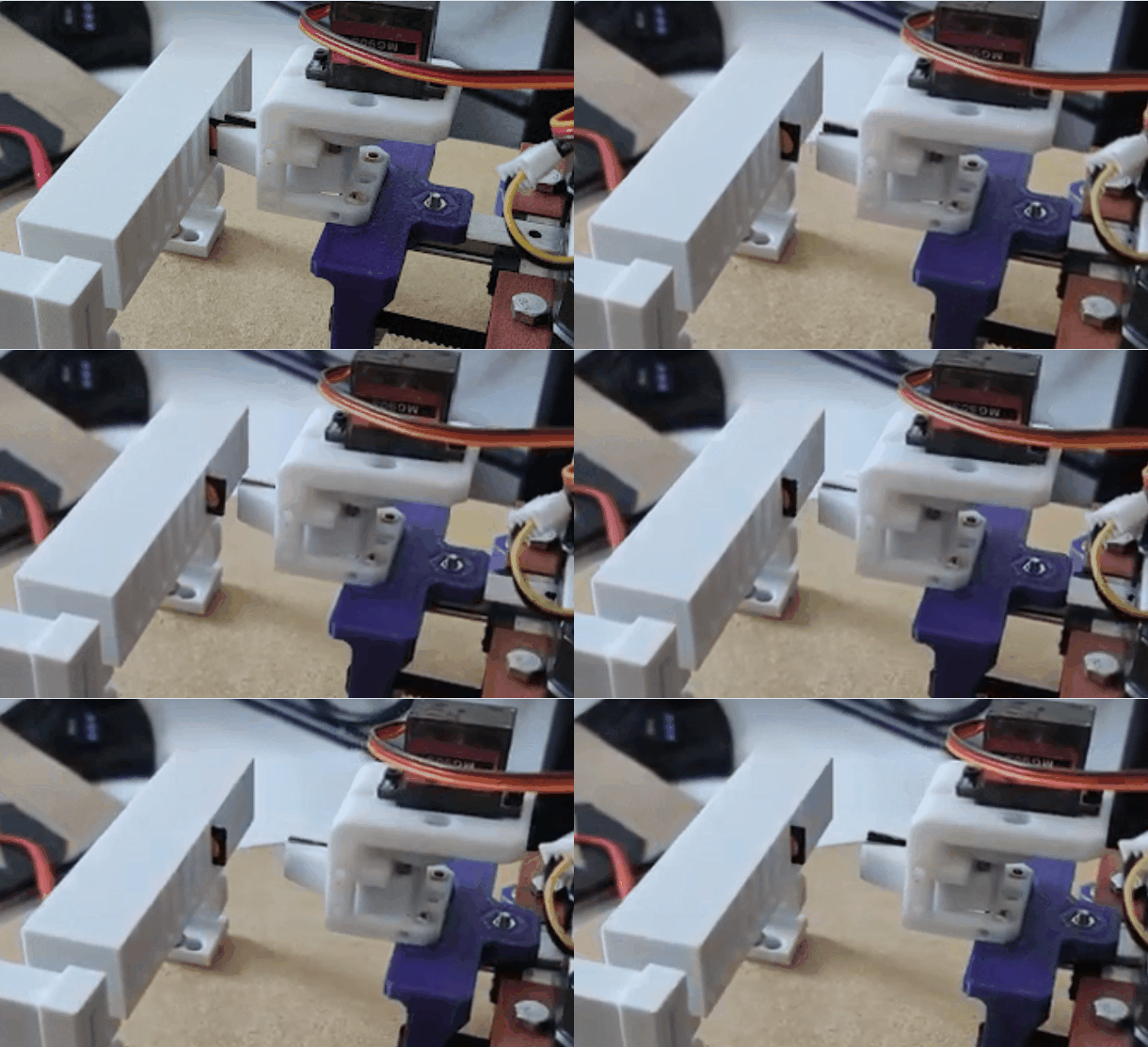
A motion that I found to be very useful and it looks interesting is when the card is inserted, the gripper makes a second push with its beak to make sure that it sits well in. I just like watching it go.
Control software
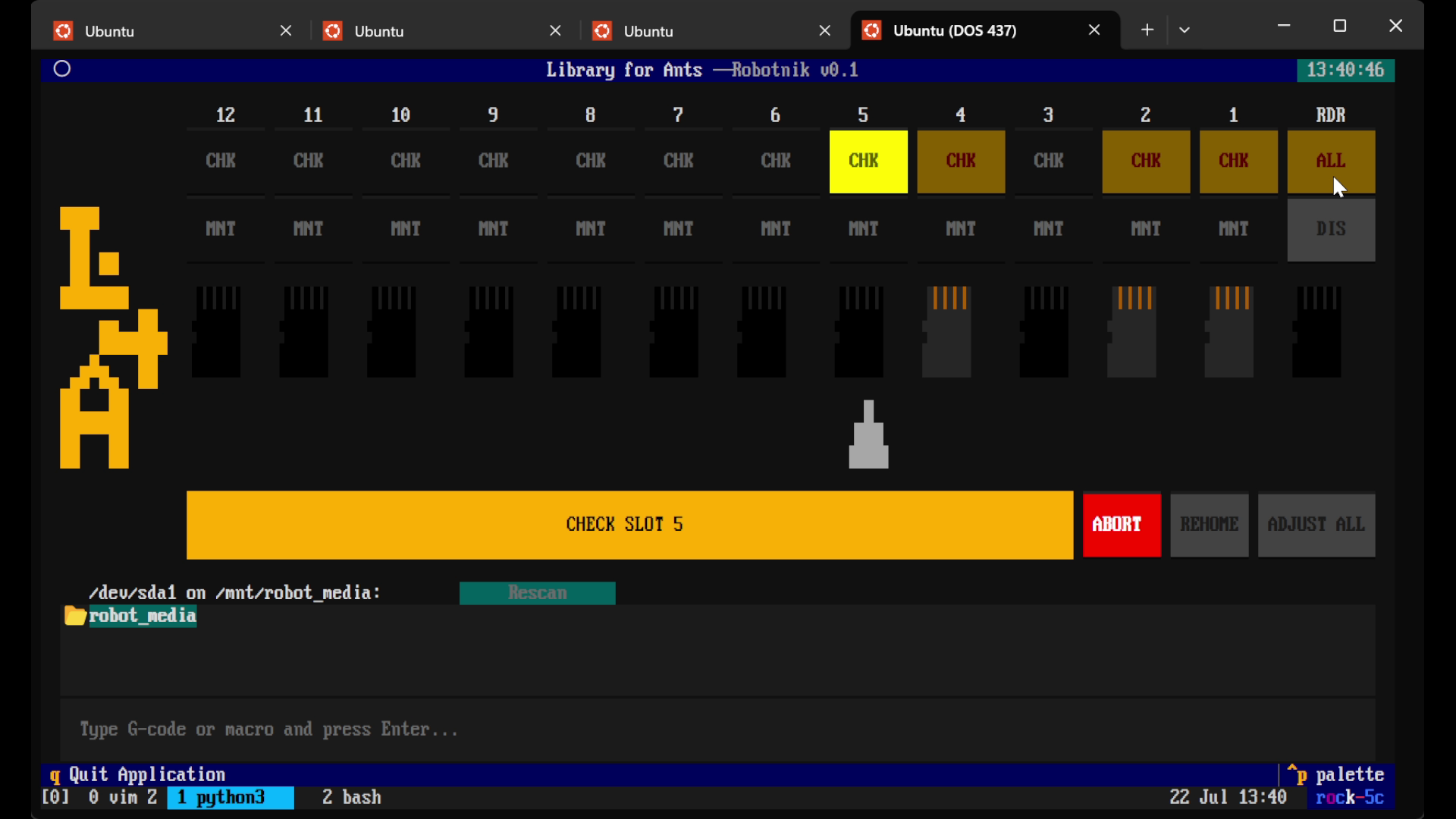
The control program is written in Python and uses Textual library for fancy TUI interface. There is a bunch of macros that do all the interesting stuff like picking a card, making sure that it's picked up, shoving it in and gently nudging it to make sure that it's in all the way.
It provides basic control functions like picking a card, mounting it in the reader, swapping out with another card. It can do "inventory check" to see which cards are currently in the magazine. Some of its functions can be seen in the video. For things that didn't make their way in the TUI there's a command line and you can resort even to typing raw G-code, which is useful for debugging.