ststephen510
-
API Documentation and Lab Testing.
10/19/2026 at 14:30 • 0 commentsA short update on what has been going on the last two weeks:
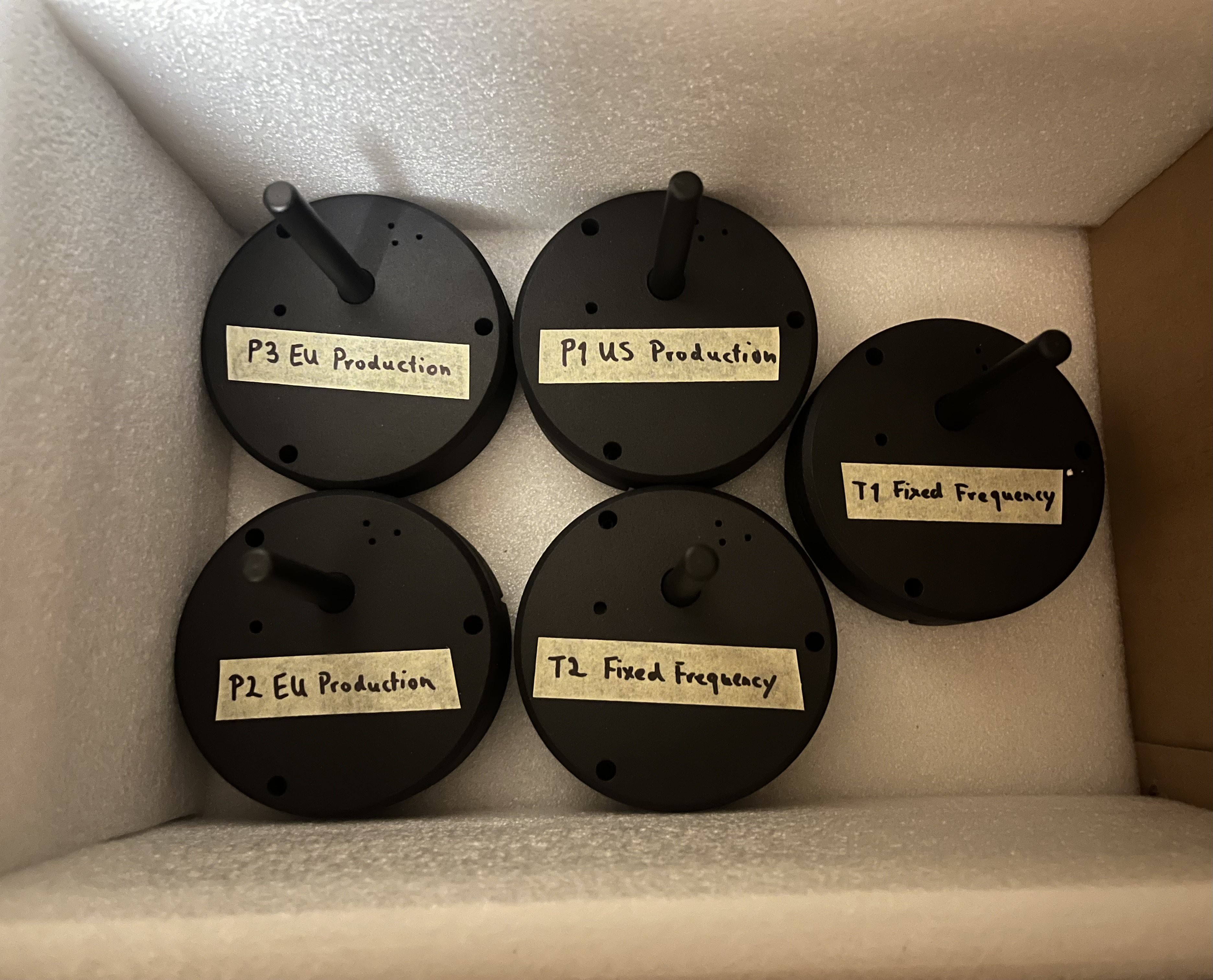
Samples were prepared and are now on their way to the lab that will do the FCC Part 15b and CE RED testing.
![]()
Second, the API documentation is now released on GitHub.
-
Teaser
10/06/2026 at 02:45 • 0 comments -
Pilot - resolving the last design issues
10/03/2026 at 05:11 • 0 commentsThis prototype is not strictly my pilot build. There are still a few minor board changes planned. But my last board issues have now been officially resolved:
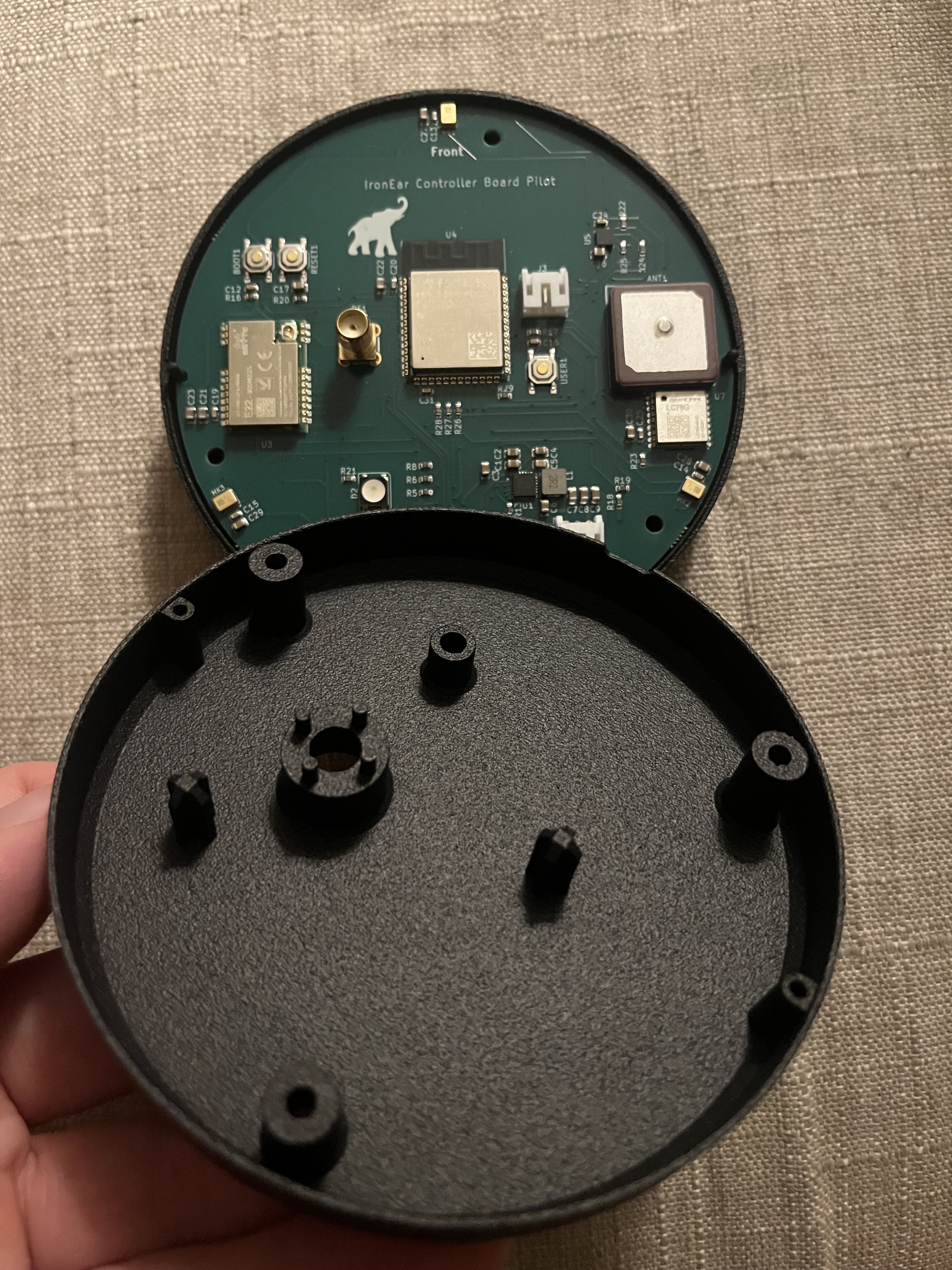
This board has now a ceramic antenna giving good indoor access to the GNSS satellites,
The user and reset buttons are in different areas of the board and the toothpick solution is replaced by a more clever design (see video with sound),
A JST PH connector for UART was added for the labs fixed-frequency testing. The connector will likely be removed for the production version.
While the enclosure will not be shipped with a waterproof enclosure there is a relatively simple path forward for anyone to make their IronEar nodes waterproof.
![]()
-
Some core firmware functions
10/02/2026 at 04:21 • 0 commentsThe firmware runs on the ESP32-S3 with ESP-IDF 6.0 and does all the listening on the board. Three PDM mics feed one second windows into a YAMNet classifier with 521 sound classes, quantized to int8 and running under TensorFlow Lite Micro. The model weights sit in PSRAM, which turned out to be faster than running them from flash. One window takes about a second to classify, so the board keeps up with real time with a little margin.
![]()
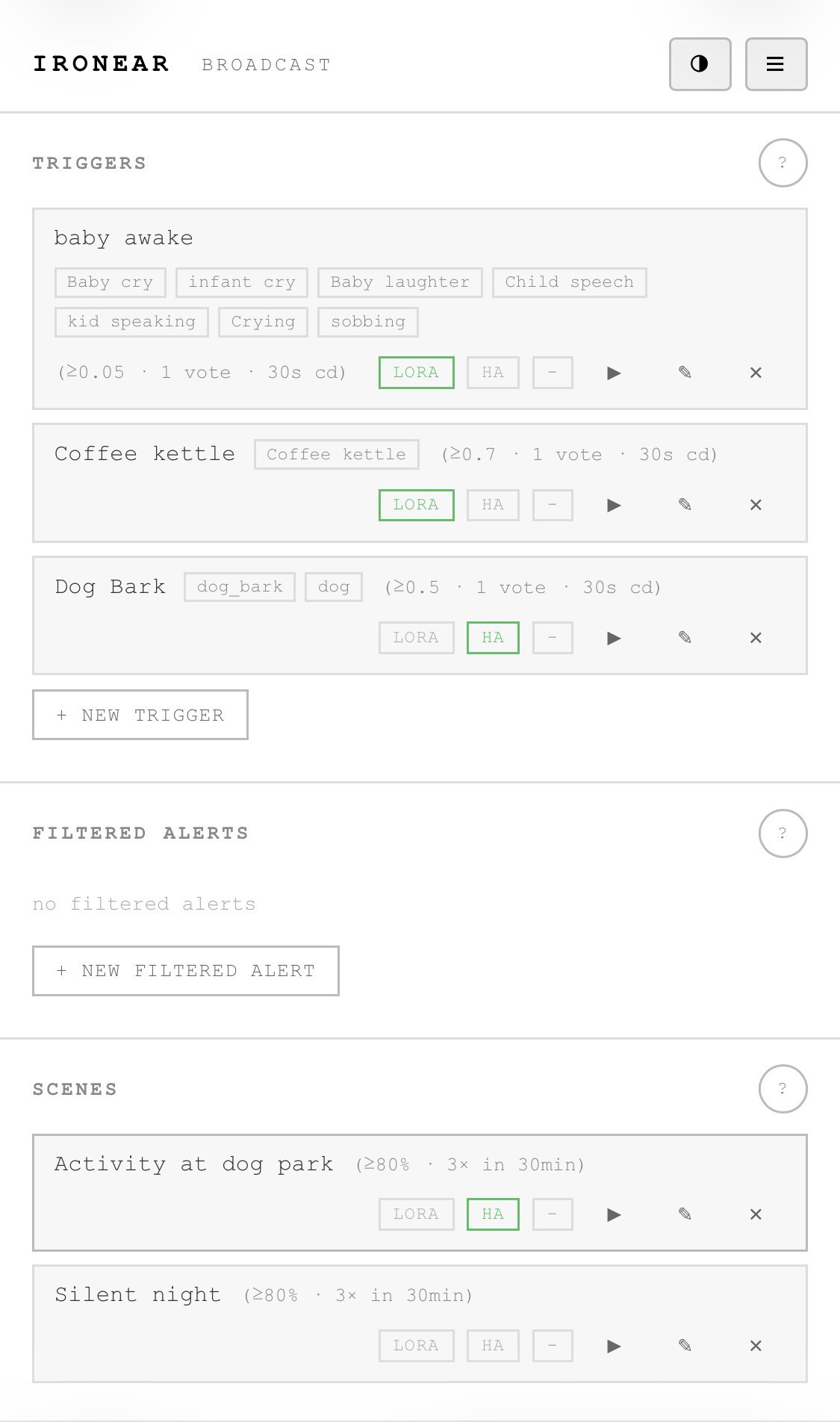
Nothing leaves the box as audio. What comes out is a label, a score and a level above the room floor. On top of the fixed classes you can teach the board your own sounds. It records the classifier's embedding of your doorbell or your garage door for a few seconds and matches each new window against it from then on. Scenes are a different thing. You let the board listen to a place for a minute or more and it keeps a fingerprint of which sounds occurred and how often. Later it compares the last two minutes of what it hears against that fingerprint, so "quiet night" or "dog park" become states the board can tell you it is in.![]()
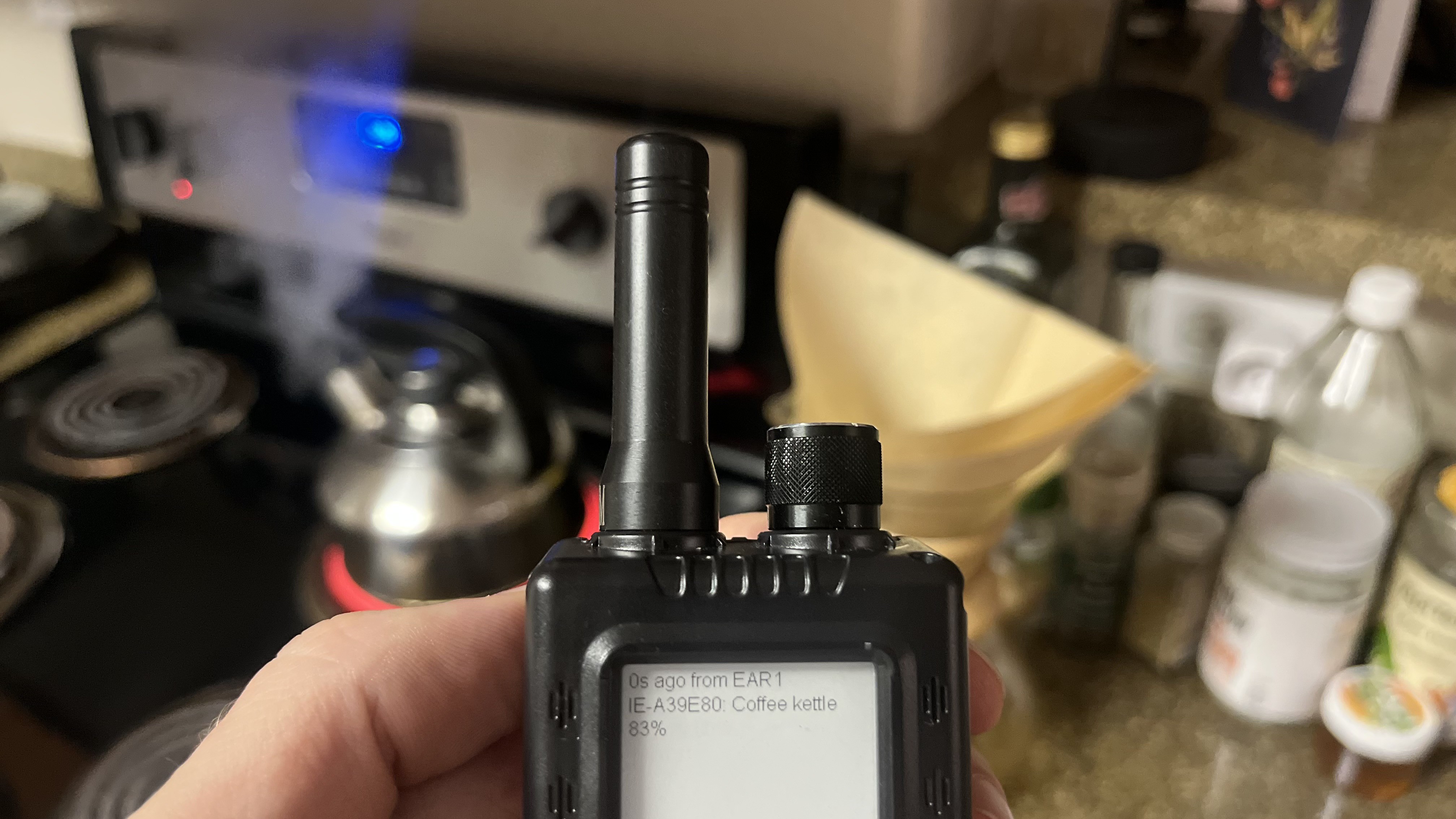
Alerts go out three ways. Over LoRa on a private Meshtastic channel, so a phone with a radio sees them without any network. Over MQTT into Home Assistant, where the board shows up as a device with its sensors and an alert event. And between boards in the same house over ESP-NOW, so a node without a radio can hand its alert to one that has one.
![]()
![]()
-
RC2 - One board with 1.5 issues
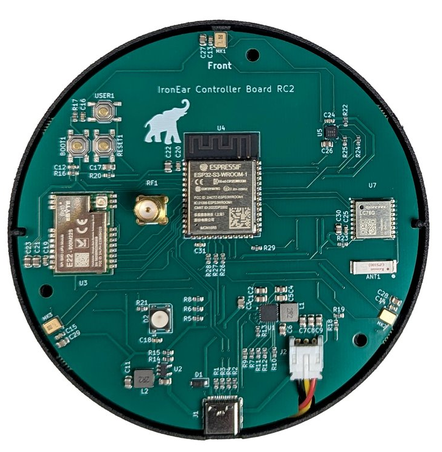
10/01/2026 at 07:06 • 0 commentsRC2, my second release candidate :). So much better than RC1. Charging and charge status now work beautifully. I'm using a Texas Instruments BQ24295RGER, a TLV62569DBVR, and an ADC [for battery voltage]. No singing caps. I switched the LoRa module from NiceRF to an EBYTE module, and the Quectel module from L76K to LC76GAB. The antenna matches the EBYTE modular approval for FCC. All the changes are mainly driven by FCC and CE RED certification.
The issues with RC2:
- My Rainsun GPS1003 is just not seeing any satellites. I'm so convinced it must be an issue with the new LC76GAB that I message Quectel. I receive a firmware update for the GNSS module, but still nothing. I hold a big ceramic antenna to the module, and then and there I receive an abundance of satellites. I decide that the next prototype version needs a ceramic antenna.
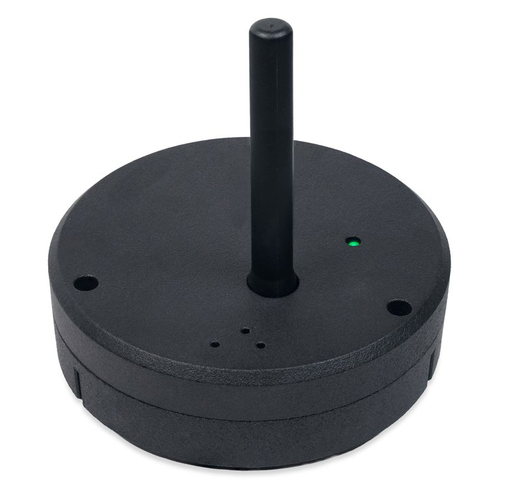
- Do you see the three tiny holes on the top of the enclosure? These are to press the reset, boot, and user button with a toothpick :). Never liked that solution, so the next prototype has this solved.
![]()
![]()
-
Prototype RC1 - My first PCB
10/01/2026 at 06:43 • 0 commentsIn my job, RC means release candidate. This means that after my proof of concept, I thought this project was cool and that maybe someday I could convince others that this is a pretty useful sensor to have. My wife and I were staying with my parents and parents-in-law during a period of parental leave (thank you, California), and that is when I was able to learn so much about PCB design. I used KiCad (also thank you, KiCad, for providing this awesome tool for free) and redesigned my board three times, because by the end of each redesign I had learned so much that I thought it would be best to just design the PCB one more time. I learned about these amazing datasheets for each component, about PCB manufacturers, about trace widths for data and power lines. And probably a few hundred other lessons.
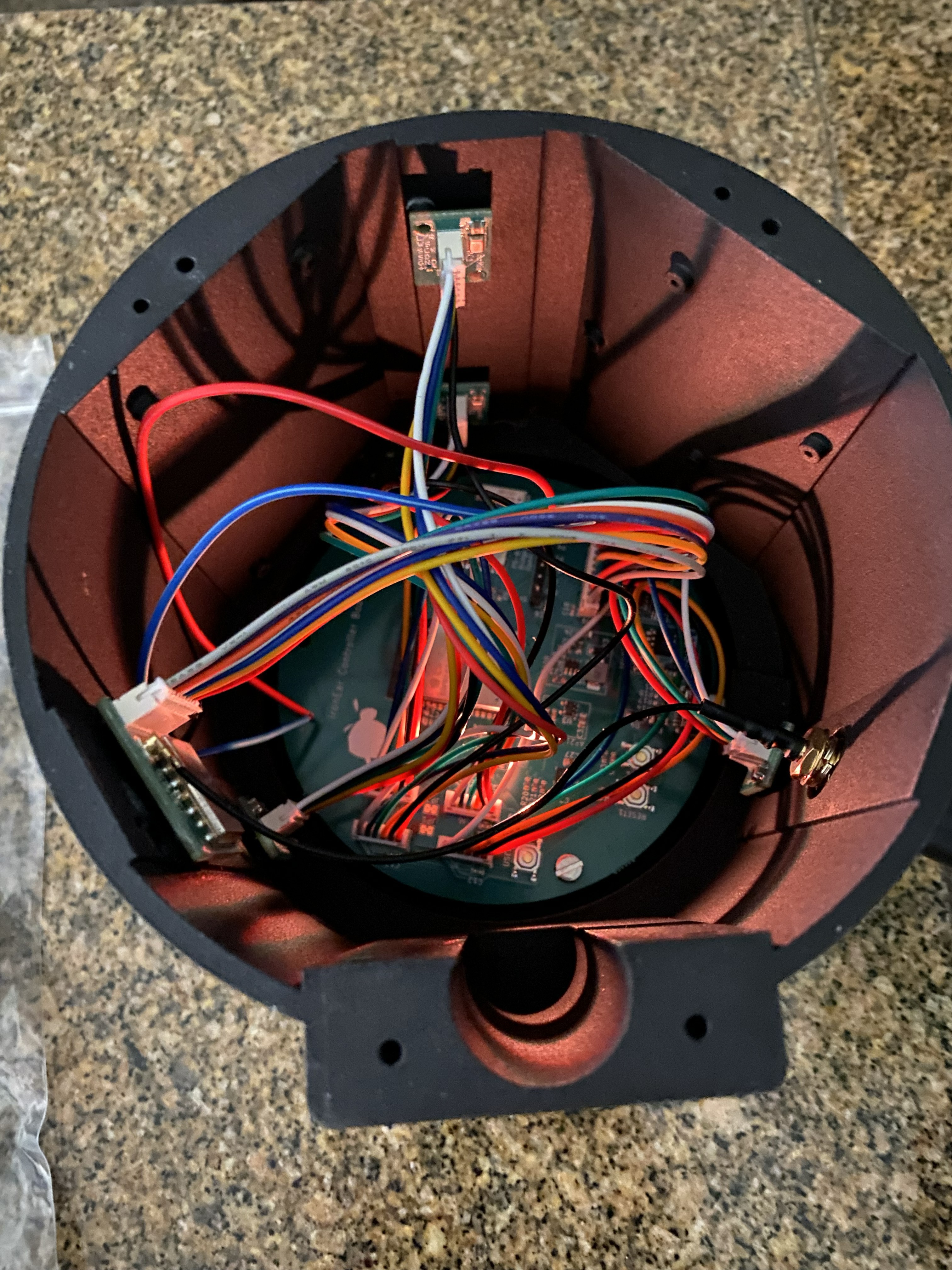
In this prototype, I designed a LoRa breakout board, a mic breakout board, a controller board, and an enclosure. The main issues on this design were:
- Battery charging not working
- Singing caps
- Hot inductor
- A missing pull-up on EN, which kept the board from working. I had to bridge EN to +3V3 on each board to make it work.
![]()
-
Prototype Alpha - Proof of Concept
10/01/2026 at 06:18 • 0 commentsIt was relatively easy to create models that could classify a few sounds. I used Edge Impulse to train them. At that time the most difficult task was finding training data and cutting it into the correct window size. My favorite sounds to teach and to show the proof of concept were "Cough", "Clap", and "Whistle", sounds that I could easily make to test my models. My wife learned quickly that if there was clapping, or coughing, or whistling in the house, I was testing my project.
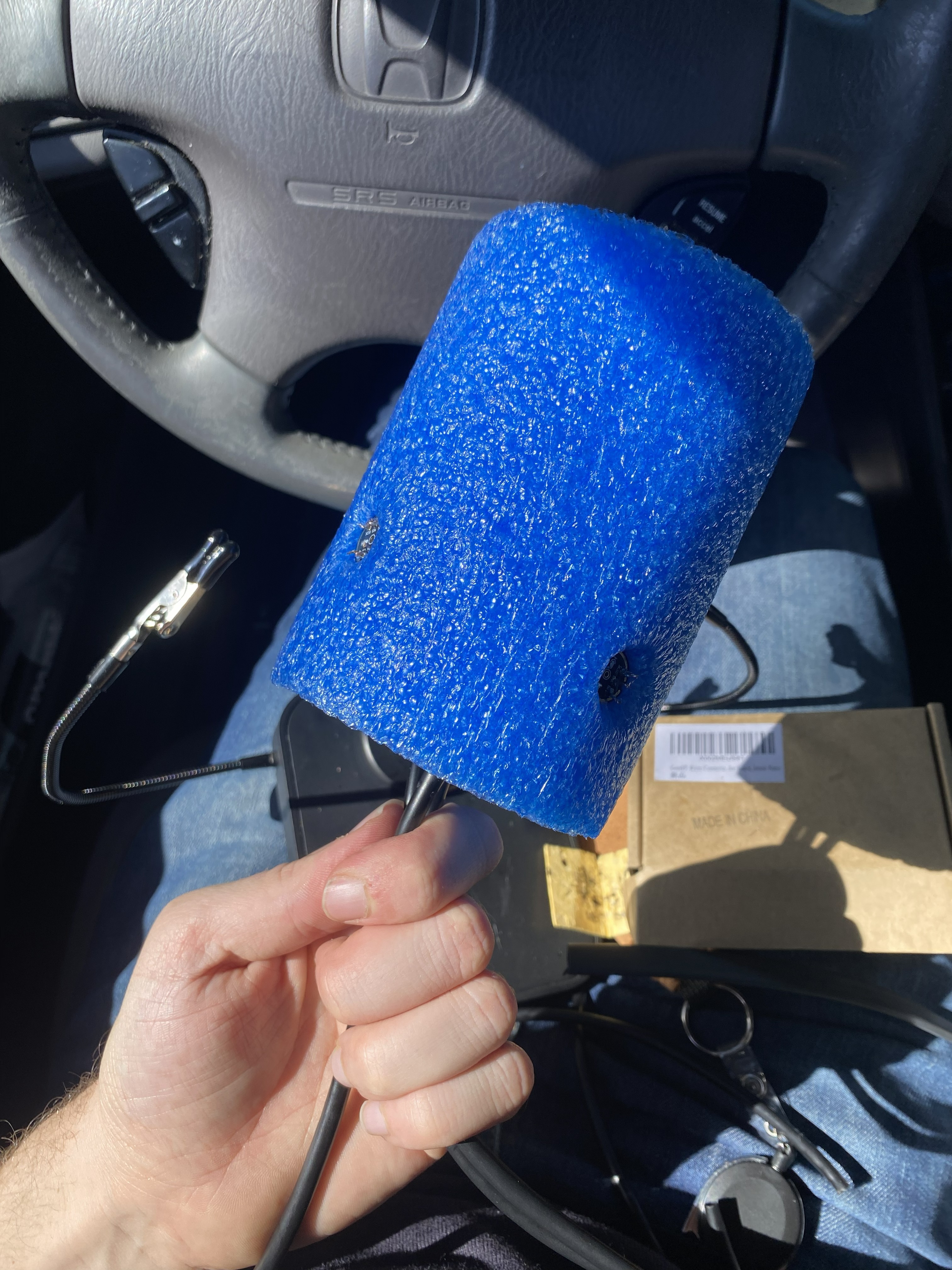
Anyways, my hardware setup for the first proof of concept was an ESP32-S3 dev board and 3x INMP441 modules, and at that time I also had some LD2450 and LD2451 radar modules that I was testing.
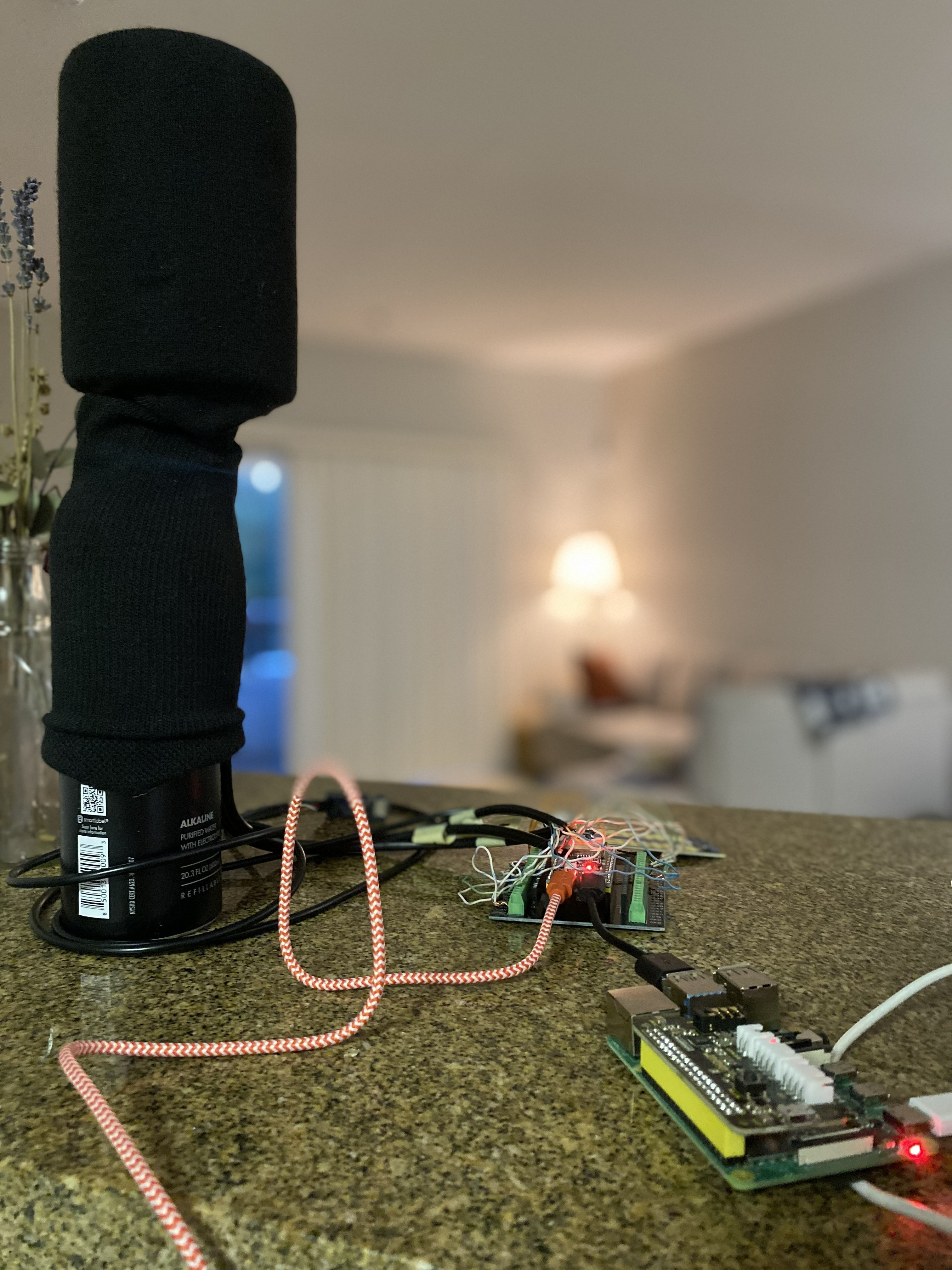
Here you can see my "sentry tower" setup. A slice of pool noodle with holes for the mics and a channel for the wiring, covered by a sock.
At that time I also came across Google's YAMNet and TFLite. YAMNet already knew 521 sounds, far more than I could ever collect training data for, and TFLite Micro was the way to run a model like that on a microcontroller - except it didn't fit on my microcontroller. So from then on the task was fitting it onto an ESP32-S3.
![]()
![]()
-
The Beginnings
09/30/2026 at 05:07 • 0 commentsHi, as I'm writing this now my prelaunch page on Crowd Supply is live. This is a huge milestone for me and not something I anticipated a year ago. The start of the project was triggered by a few thoughts that merged into this idea: (1) I learned about the huge human trafficking industry and the work of https://techagainsttrafficking.org/. I always wondered if there was a way I could contribute as a manufacturing engineer. I wished I had other engineering skills, such as hardware or software engineering. (2) I read about Ukraine's Sky Fortress and how they were able to successfully counter Russian drone attacks with a relatively cheap audio sensor mesh. (3) I had a conversation with a Bay Area company that builds sentry towers to surveil industrial perimeters. Those sentry towers are a bit creepy and super expensive.
All this somehow contributed to starting a project to detect sounds.
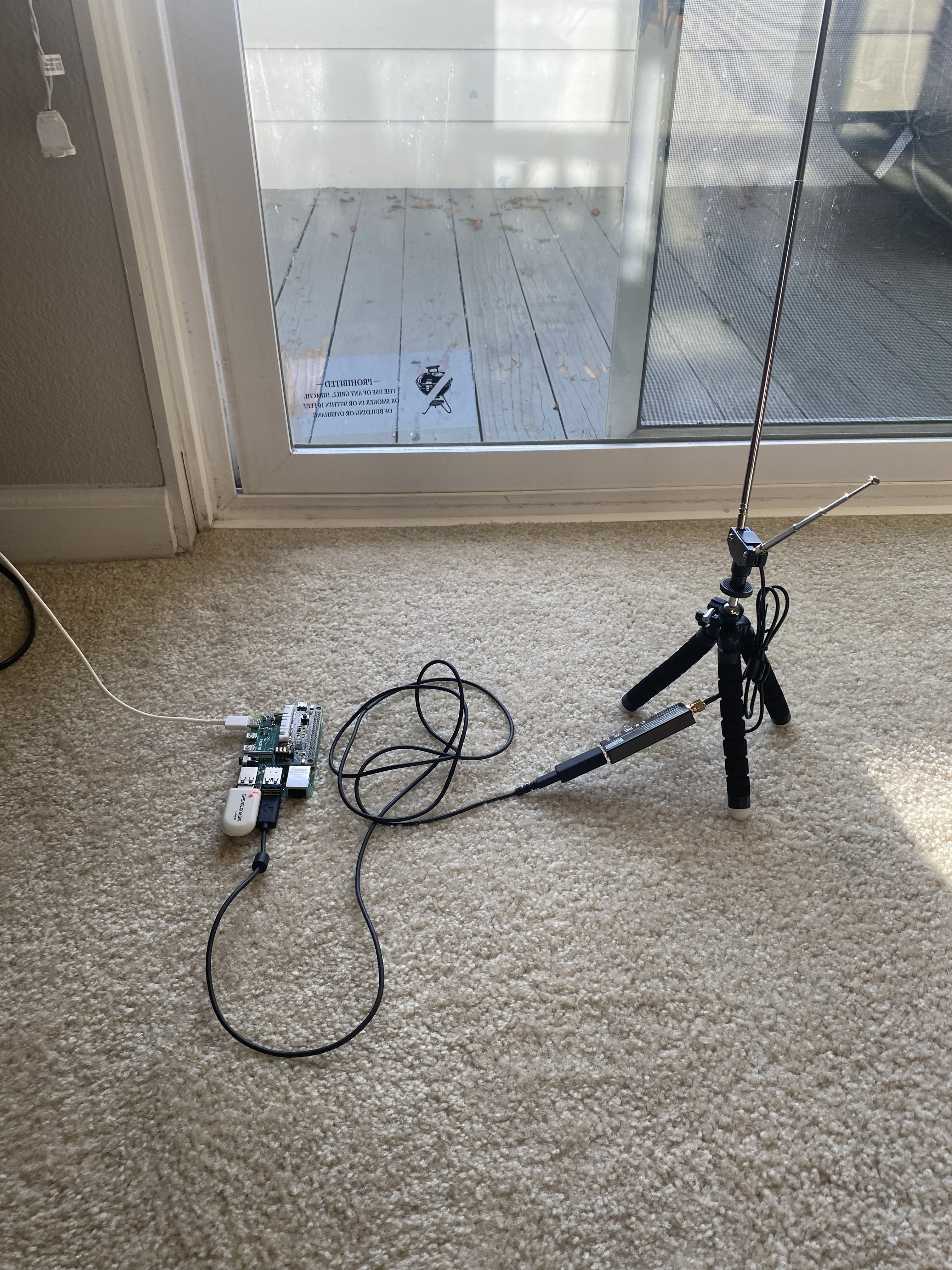
Here a picture of my early project phase:Raspberry with Respeaker 2-mics, USB GNSS Module, and RTL-SDR. RPI was browning out constantly and I understood little. Trying to create a sensor with useful information.
![]()
IronEar - On-device sound recognition
Sound recognition that runs on the device. Works with Home Assistant, Meshtastic, Meshcore, or your own software.