 Michael Yim


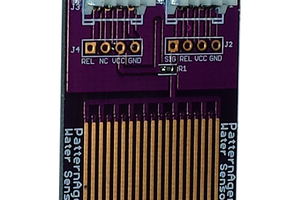
I wanted to detect the fine droplets that form through condensation, rather than waiting for rain-sized drops. When I couldn't find a suitable sensor, I made this board with 0.2mm-thin traces to bring the sensing pattern down to that scale.
Water on the surface creates a conductive path between the traces. Connect one terminal to ground and the other to an input with a pull-up; condensation pulls that input toward ground. That keeps the interface simple enough to try with a microcontroller before designing a larger control system.
A fogging bathroom mirror is an everyday example of the event this board targets. It detects moisture that has actually condensed on its surface, rather than providing a calibrated air-humidity reading.
More product information: https://www.questwiseventures.com/products/water-condensation-sensor-board
Other possible applications include experimenting with condensation inside an enclosure or logging when a monitored surface becomes wet and dries again. These would need testing in the actual installation. Placement matters because the board senses water on its own surface, rather than measuring the surrounding air’s humidity.
 Pattern Agents

 Horacio Bouzas
 Cedric
 Augusto