0%
0%
mini generator 230 V lighting bulbs 3 W - 75 w
generator 230 V Ac lighting bulbs 3 W - 75 W using a single coil
 sciencetoolbar
Become a Hackaday.io member
Already have an account? Log in.
Just one more thing
To make the experience fit your profile, pick a username and tell us what interests you.
Pick an awesome username

hackaday.io/

Your profile's URL: hackaday.io/username. Max 25 alphanumeric characters.
Pick a few interests
Projects that share your interests
People that share your interests

 Elite Worm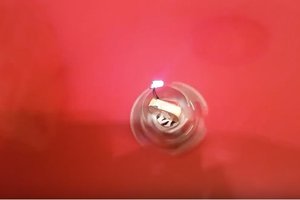

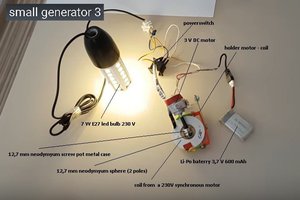
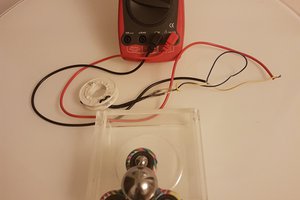
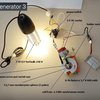
small generators, my hobby....
The secret of the presented small generator is that, the coil (stator) provides a "total capture" of the magnetic flux generated by the spining neodymium sphere ( the stator) - this is possible using a sphere shape which is fixed on the pot metal case between the magnetic poles . I manage to avoid the " standard brake" positioning the sphere a little higher than the stator ( coil ) but I need to increase the RPMS ( I am using 2 poles spheres). I consider it a succesful educational layout, created in educational purpose, not in commercial purpose. Probably as an industrial generator needs a lot of improvements
thx st