 brtnst
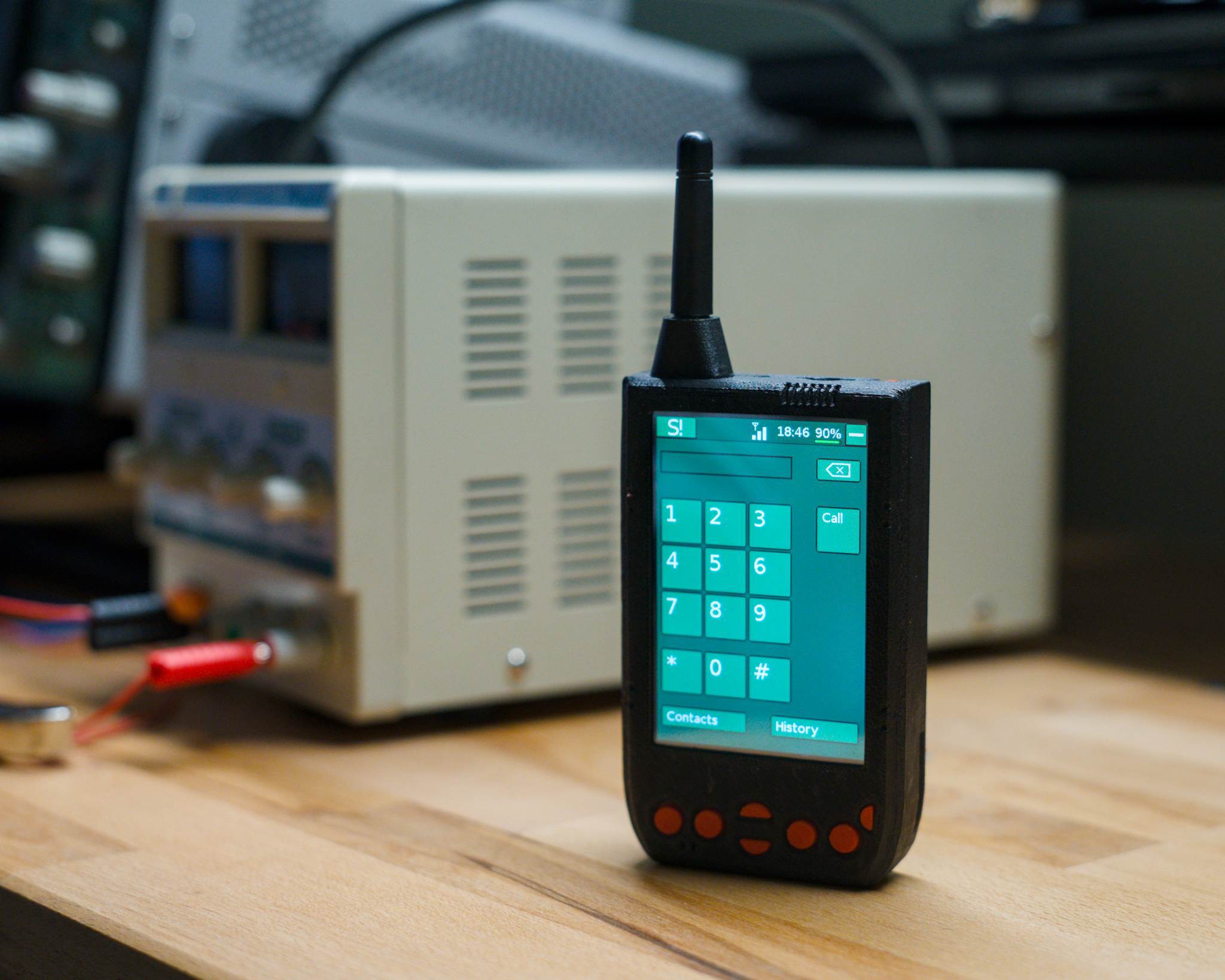
It was a long and arduous journey, but in the end I managed to come full circle, and the SDA is now also a phone.
Hardware
Fortunately, there’s enough space inside the SDA for two SDAs, so adding a SIM800 module, a microphone, a speaker, and an antenna wasn’t a problem.
Well, there was a bit of a problem with the antenna - it turned out that enclosing the PCB antenna between the main board and the display wasn’t the best idea. A weak signal would have been tolerable, but interference regularly caused the phone app to crash. (Now I understand why phones have such thorough shielding inside.) So the antenna was moved to the outside, and the whole device took on a strong walkie-talkie vibe.
Another problem turned out to be battery life with the phone module active, which is why there’s a noticeable bulge hiding a larger battery.
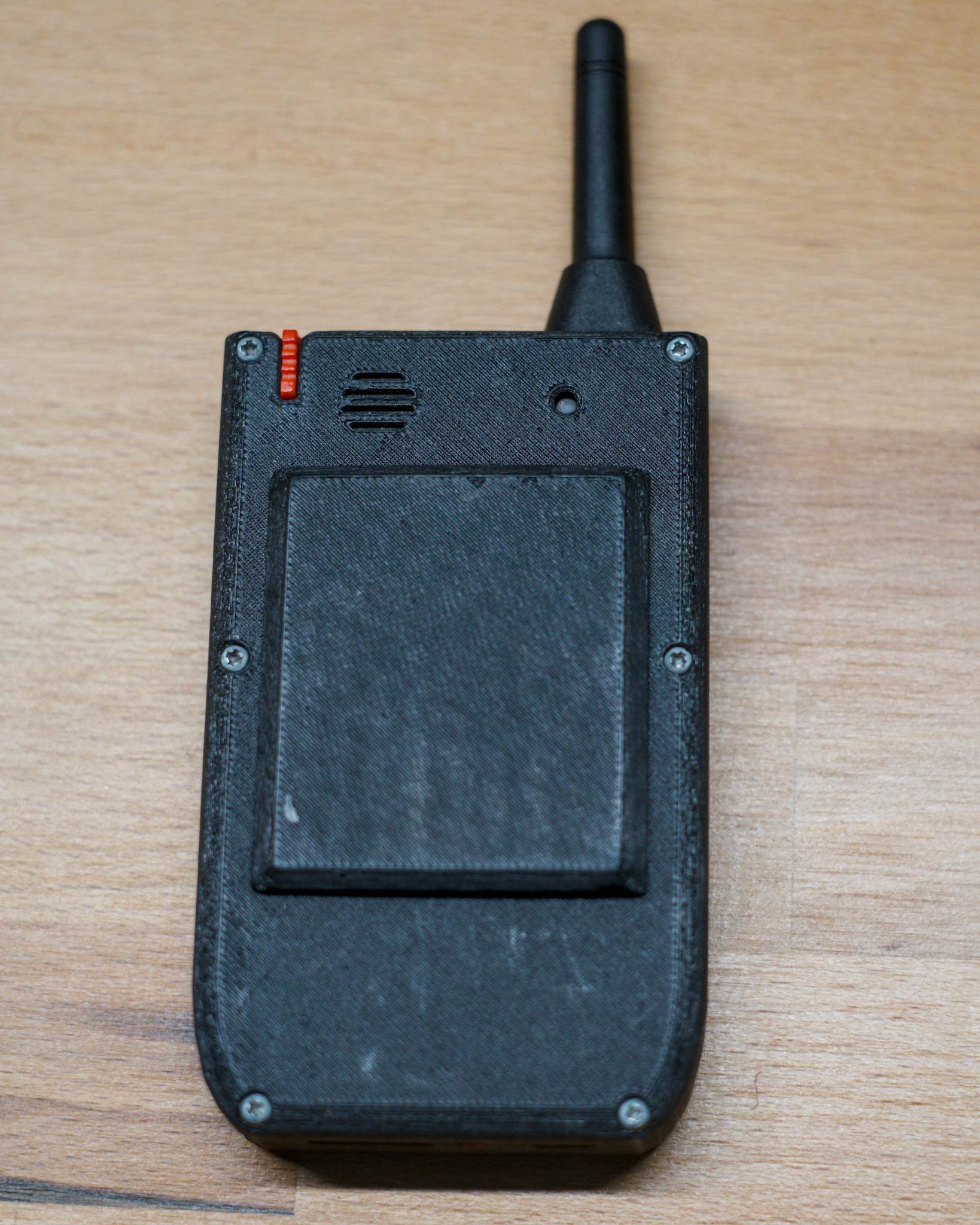
The module connects to the internal expansion connector.
Overall, no major hardware modifications were needed.
Software
The software turned out to be a bit of a challenge; the SIM800 documentation is puzzling in places, and I think I even encountered a bug in the module’s firmware. Implementing Czech diacritics was a challenge in itself. (I even had to consult the GSM standards.)
Implementing all the phone apps directly in SVS was another challenge, and I think it really advanced the entire software stack. In particular, the need to control the module through the “Manager” application, which handles communication and periodically reads the module’s status. Then applications like Dialer or Messages must pass all their requests to the Manager application, which is a bit of a challenge on a non multi-tasking system. In any case, everything works pretty well - at least from the user’s perspective.
At the same time, as part of the implementation, I added system-wide support for basic emojis.
Google lets you download your contact list, including avatars. So if you write a small script to convert the data into a format supported by SDA, you can import the contacts relatively easily.
Conclusion
I don’t use this device as my main phone; it’s more of a fun demo. For quite a while, the whole thing worked very poorly. I laid out the basic design around 2022, and it wasn’t until sometime around 2025 that the entire stack started working more or less properly.
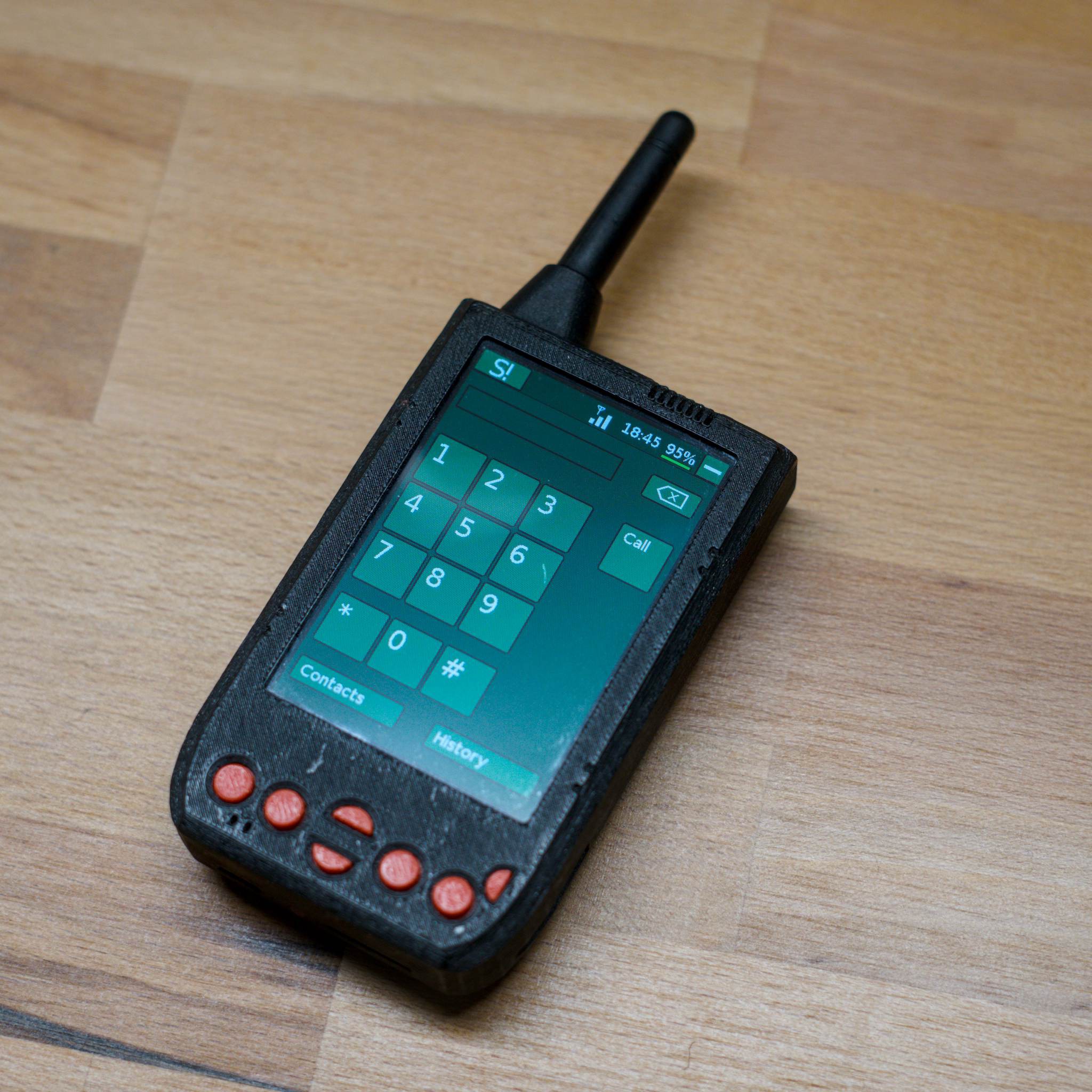
In the future, I’d like to get 2G internet up and running; the module should support it, and using some kind of server-side app, it wouldn’t be hard to bridge the SDA with a communication platform like WhatsApp, Messenger, or Slack. At the very least, email and weather updates should be easy to implement.
p.s: Sources for the modified phone case are available on the SDA Wonder GitHub. Phone app sources are in the SDA_OS Apps repository.
pps: No demo video this time - unfortunately, the SIM card in my device has expired. But if you want to try a slightly older version of the phone's software, you can find it on the website in the emulator under APPS -> Dev -> Phone.
Discussions
Become a Hackaday.io Member
Create an account to leave a comment. Already have an account? Log In.