 QC
QC

The amount of possible USB C cable combinations is endless. If you use the wrong cable, data transmission may be slower than possible or certain devices may not work at all. In the USB C standard, the cable plays an important role and has to advertise itself as such. All of them need to have certain pins connected, some need to be grounded, some need to have resistors attached.

What makes it special?
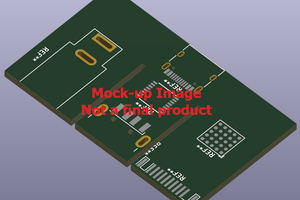
Unfortunately there is no easy way to extract whether a certain cable can support a certain use case. If a cable has a broken pin, that makes it even worse, due to their unpredictable behavior. The C2C caberQU cable tester solves this once and for all. By flipping the USB connectors, the opposing LEDs for some pins light up due to them not being mirrored. That's on purpose and defined in the USB C standard. The product is sold with one CR2032, the PCB and some basic instructions. The USB C cable is not included. You have to extract the needed pins for your desired usage on your own, unfortunately that can not be done universally for all possible combinations. No dedicated power supply is needed, all necessary power is supplied via the CR2032 battery. The battery is only discharged when a cable is connected and should last for a while.
 The item still is a prototype. It is working as intended, but funny quirks and other things are possible. It is not certified, comes as a kit and only suited for prototyping. No soldering or any difficult assembly is needed.
If you have any questions, just shoot me a message!

 Torbjörn Lindholm
How would this behave with an active thunderbolt 3 cable?
I imagine it won't work properly, but is there any risk of damaging the active circuitry?
Thanks.