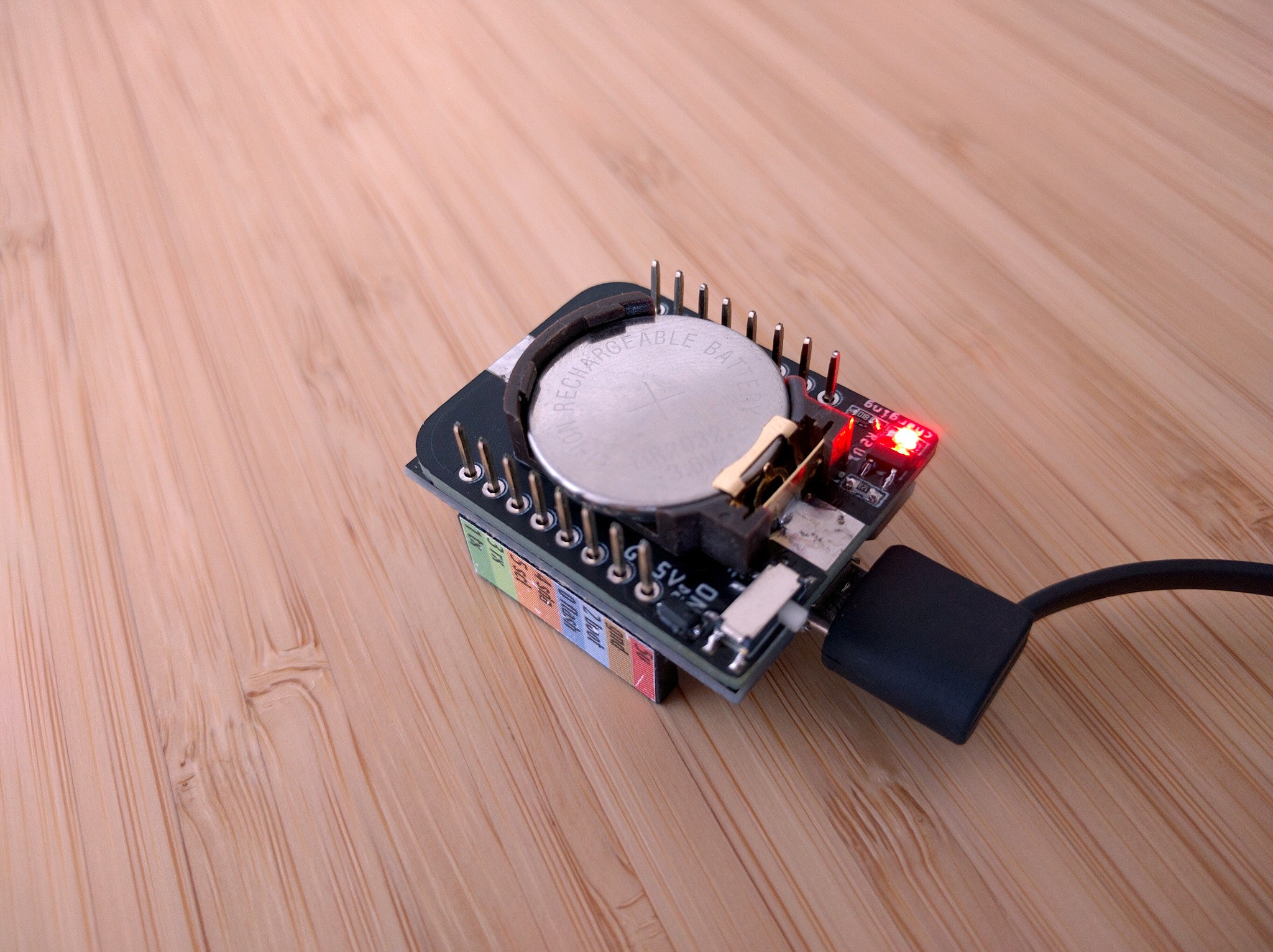
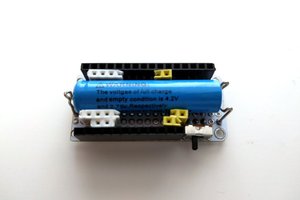
Why WEMOS has a battery shield for the D1 Mini, it's supposed to work with relatively large LiPO batteries. I needed something that could fit the battery right there on the shield, even if it's not too strong.
Some additional battery holders came today, so I soldered a couple of more shields and put them on sale on Tindie. In the process I ran out of the charging chips, so I will make more when those arrive.
I needed a battery for my #D1 Mini UI Shield, so I revived this project and tried a second attempt. This time I'm using a bigger battery, LIR2450, though I made sure you can solder a holder for the smaller LIR2032 as well. There has been a change in how the charging works — with the switch on, the board is powered from the battery (through a shottky diode, to protect it from USB power you might have connected), with the switch off, the battery is charging.
There is a battery shield for D1 Mini development board, produced and sold by Wemos, but I find it a little lacking for some specific use cases. It wastes power by boosting the battery voltage to 5V and then letting the on-board LDO bring it back to 3.3V. It has a separate USB socket for charging the battery. It doesn't have a power switch. And most of all, it doesn't contain an actual battery — you have to connect that separately. That means it not suitable for some really small and portable projects. So I made this.
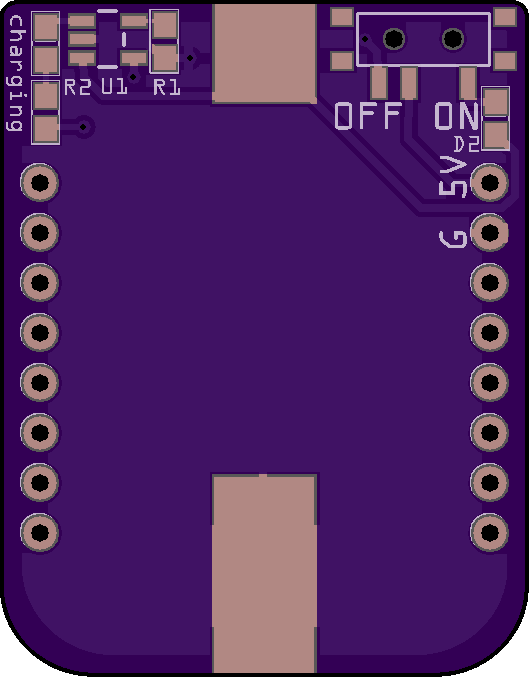
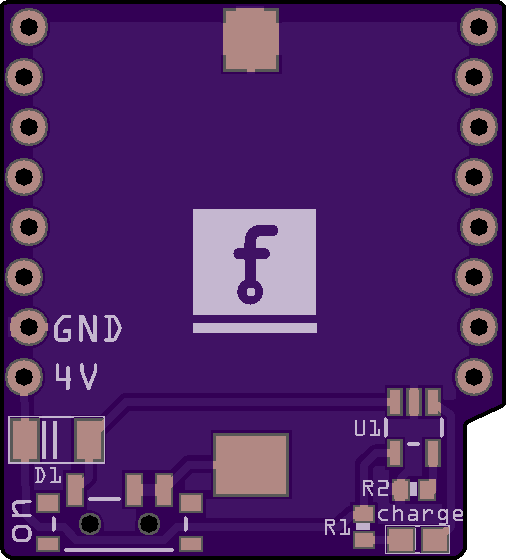
It's a very simple shield. It only has the battery itself, behind a shottky diode to protect it from your USB power, a charging circuit connected to the 5V pin, with an indicator diode, and a power switch. That's it.
There are two down-sides for using this design. First, the battery is tiny — only around 40mAh — so it won't last long. Second, it only provides between 3.6 and 4.2V to the 5V rail, so if you have anything that actually requires 5V, it won't work. But I think it's still useful for certain projects.
Well, it's sufficient for simple things, like driving a small display or a sensor or two. It won't work if you want to use it for streaming MP3s, that's true.
The problem is not in this project. It's the D1-mini itself. The voltage regul and the USB chip are really not small-battery friendly.